Evidence-based practice in nursing is no longer optional. It is the gold standard of modern healthcare. Whether you are a first-year nursing student or a seasoned registered nurse, understanding how to use the best available evidence to guide patient care is one of the most important skills you can develop.
Evidence-based practice in nursing combines rigorous research, clinical expertise, and patient values to make the safest, most effective care decisions. This approach has transformed nursing from a task-oriented profession into a science-driven discipline with measurable outcomes and clear accountability.
In this comprehensive guide, you will learn exactly what evidence-based practice is, why it matters in modern healthcare, how to develop strong PICOT questions, where to find high-quality evidence, how to critically appraise research articles, and how to apply findings to real clinical scenarios. You will also find over 20 expert tips for completing EBP assignments, 15 frequently asked questions, 10 real-world nursing examples, and a full breakdown of the evidence hierarchy.
This guide is written for BSN, ADN, RN-to-BSN, and MSN nursing students who want to master evidence-based practice and produce outstanding academic assignments. Let us get started.
What Is Evidence-Based Practice?
Definition
Evidence-based practice (EBP) is a problem-solving approach to clinical decision-making. It integrates the best available research evidence with clinical expertise and patient values to guide healthcare decisions. The goal is simple: provide the highest quality of care possible using the most current, reliable evidence.
The most widely accepted definition comes from Dr. David Sackett, who described EBP as “the conscientious, explicit, and judicious use of current best evidence in making decisions about the care of individual patients.” This definition remains the foundation of modern nursing education and clinical practice.
History of EBP
The roots of evidence-based practice stretch back to the mid-19th century. Florence Nightingale used data collection and statistical analysis to improve patient outcomes during the Crimean War — a remarkable example of evidence-based thinking before the term even existed.
However, evidence-based medicine as a formal movement emerged in the early 1990s at McMaster University in Canada. Researchers led by Dr. Gordon Guyatt published guidelines for critically appraising medical literature. Their work quickly influenced nursing, leading to the development of evidence-based nursing practice frameworks that are now standard worldwide.
By the early 2000s, nursing bodies such as the American Nurses Association (ANA) and the National League for Nursing (NLN) formally embedded EBP into nursing education competencies, accreditation standards, and clinical practice guidelines.
Evolution in Healthcare
Over the past three decades, evidence-based practice has evolved from a niche academic concept to the central pillar of healthcare quality improvement. Today, EBP informs clinical guidelines, hospital policies, nursing procedures, medication protocols, and patient education materials across every clinical specialty.
Importance in Nursing
Nursing is a practice discipline. Every clinical decision a nurse makes directly affects a patient’s safety, comfort, and recovery. Evidence-based practice in nursing ensures that those decisions are grounded in science, not habit or tradition. It reduces variation in care, increases consistency, and demonstrates professional accountability.
Benefits for Patients and Healthcare Professionals
- Patients receive safer, more effective care based on proven interventions
- Nurses develop stronger critical thinking and clinical reasoning skills
- Healthcare organizations reduce costs by eliminating ineffective practices
- Clinical teams communicate more clearly around shared, evidence-based protocols
- Nursing as a profession gains greater credibility and authority in healthcare settings
The Three Core Components of Evidence-Based Practice
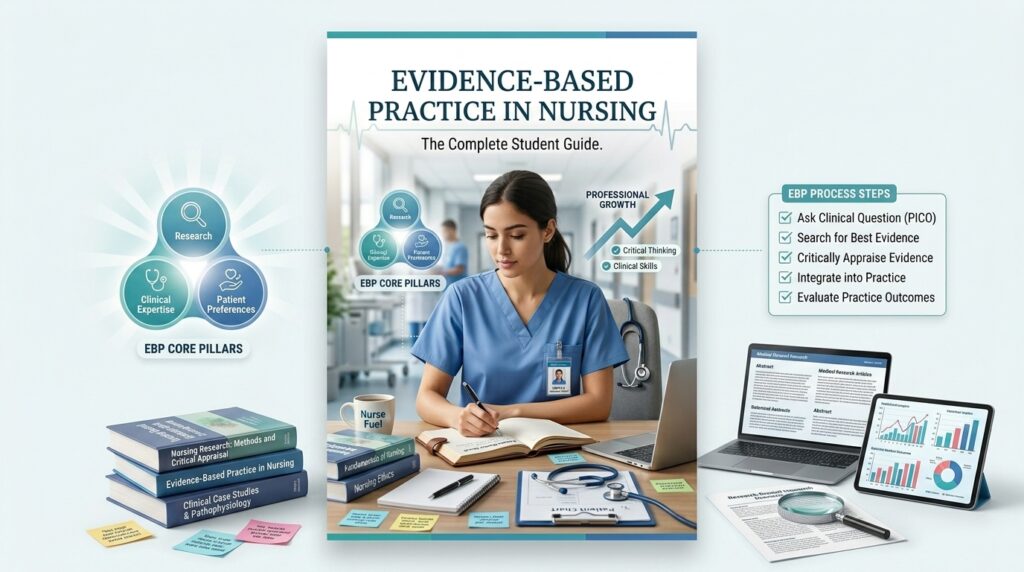
Evidence-based practice in nursing rests on three equally important pillars. Ignoring any one of these components weakens the entire approach.
Component 1: Best Available Research Evidence
The first component is research evidence the findings from rigorous, peer-reviewed scientific studies. This includes systematic reviews, meta-analyses, randomized controlled trials, cohort studies, and other well-designed research published in reputable journals such as the American Journal of Nursing, the Journal of Advanced Nursing, and JAMA.
Research evidence does not mean simply reading one article and applying it. Nurses must evaluate the quality, relevance, and strength of the evidence before applying it to practice. The Cochrane Library, PubMed, and CINAHL are the primary sources for locating this evidence.
Clinical Example: A nurse working in a surgical unit notices high rates of catheter-associated urinary tract infections (CAUTIs). She searches CINAHL and finds a Cochrane systematic review confirming that nurse-led daily catheter assessment bundles significantly reduce CAUTI rates. That research evidence becomes the foundation of a quality improvement initiative.
Component 2: Clinical Expertise
The second component is clinical expertise the knowledge, skills, and experience that nurses accumulate through years of direct patient care. Clinical expertise helps nurses interpret research findings in the context of real clinical environments, resource availability, and institutional policies.
Clinical expertise also includes judgment about when research evidence may not apply directly to a specific patient situation. An experienced nurse knows that guidelines are tools, not rules, and that individual patient circumstances often require thoughtful adaptation.
Clinical Example: A research article recommends early ambulation after knee replacement surgery. An experienced orthopedic nurse recognizes that a specific patient with severe orthostatic hypotension needs modified ambulation protocols. Clinical expertise bridges the gap between research findings and real-world application.
Component 3: Patient Values and Preferences
The third component is patient values and preferences. Evidence-based practice is not about imposing treatments on patients. It is about engaging patients as active partners in their own care decisions.
Patient values include personal beliefs, cultural backgrounds, religious convictions, treatment preferences, quality-of-life priorities, and goals of care. Nurses who practice effectively always explore and respect these values before implementing evidence-based interventions.
Clinical Example: Evidence strongly supports statins for cardiovascular disease prevention. However, a patient with strong cultural beliefs about natural remedies may refuse pharmacological treatment. Respecting that preference and exploring alternative evidence-based options — lifestyle modification, diet, exercise — reflects true evidence-based nursing practice.
Why Evidence-Based Practice Matters in Nursing
Improved Patient Outcomes
Multiple studies confirm that hospitals and clinical units with strong EBP cultures achieve significantly better patient outcomes. Research published in Worldviews on Evidence-Based Nursing found that nurses in organizations with strong EBP environments reported higher quality of care and greater patient safety scores than those in institutions without EBP cultures.
Reduced Medical Errors
Nursing errors — including medication errors, fall-related injuries, pressure ulcers, and hospital-acquired infections — are a significant source of patient harm worldwide. Evidence-based protocols dramatically reduce error rates by standardizing care based on proven interventions. For example, evidence-based medication reconciliation protocols reduce adverse drug events by up to 70% in some acute care settings.
Higher Quality Care
EBP drives continuous quality improvement. When nursing teams regularly evaluate evidence and update their practices accordingly, care quality improves across every indicator — patient satisfaction scores, length of hospital stay, readmission rates, and clinical complication rates.
Better Clinical Decision-Making
Nurses make hundreds of clinical decisions every shift. Evidence-based decision-making ensures those choices are informed, defensible, and patient-centered. Rather than relying on tradition or anecdote, nurses use research evidence alongside their clinical expertise to choose the best possible intervention for each unique patient.
Cost-Effective Healthcare
Evidence-based practice reduces healthcare costs by eliminating interventions that do not work and investing in those that do. The Agency for Healthcare Research and Quality (AHRQ) estimates that preventable hospital-acquired conditions cost the United States healthcare system billions of dollars annually. EBP-driven prevention programs significantly reduce this financial burden.
Professional Accountability
Nursing is a regulated profession with ethical and legal obligations to provide safe, competent care. Evidence-based practice is a core professional standard embedded in nursing codes of ethics, accreditation requirements, and regulatory frameworks worldwide. Nurses who practice without evidence risk professional censure and patient harm.
The Seven Steps of Evidence-Based Practice
The Melnyk and Fineout-Overholt seven-step EBP model is the most widely taught framework in nursing education. Each step builds systematically toward safe, effective, evidence-driven care.
Step 1: Ask a Clinical Question
Every EBP project begins with a clear, focused clinical question. The PICOT framework structures this question to ensure it is answerable and searchable (see Section 5 for full PICOT guidance).
Nursing Scenario: A nurse notices that patients on a medical-surgical unit are frequently developing pressure ulcers. She asks: ‘In hospitalized adults (P), does implementing a structured hourly repositioning protocol (I) compared to standard repositioning practices (C) reduce the incidence of pressure ulcers (O) within 30 days of admission (T)?’
Step 2: Acquire the Evidence
Once the clinical question is formulated, the nurse systematically searches databases such as PubMed, CINAHL, and the Cochrane Library for relevant, peer-reviewed evidence. Effective search strategies use Boolean operators (AND, OR, NOT) and filters for publication date, study design, and language.
Nursing Scenario: The nurse searches CINAHL using the terms ‘pressure ulcer prevention’ AND ‘repositioning protocol’ AND ‘hospitalized adults’ with a filter for articles published within the last five years.
Step 3: Appraise the Evidence
Not all research is equal. Critical appraisal means evaluating the quality, validity, and relevance of the evidence you find. Tools such as the CASP (Critical Appraisal Skills Programme) checklists help nurses assess study design, sample size, bias, and statistical significance.
Nursing Scenario: The nurse finds a systematic review of 12 randomized controlled trials. She uses the CASP Systematic Review checklist to assess whether the included studies had low risk of bias and consistent findings before accepting the conclusions.
Step 4: Apply the Evidence
After critically appraising the evidence, the nurse integrates the findings with clinical expertise and patient values to implement the best intervention. This step often requires collaboration with the multidisciplinary team, nursing leadership, and the patient.
Nursing Scenario: Based on strong evidence, the nurse works with her charge nurse to implement a structured two-hourly repositioning schedule with documented skin assessments. Patient preferences about repositioning times are incorporated into the care plan.
Step 5: Evaluate the Outcomes
After implementation, the team measures whether the intervention achieved the expected outcomes. This may involve tracking incidence rates, reviewing patient charts, or collecting patient-reported outcome measures.
Nursing Scenario: After 30 days, the unit records a 40% reduction in new pressure ulcer cases. The team documents these outcomes as part of their quality improvement reporting.
Step 6: Share the Results
EBP findings must be disseminated to benefit the wider healthcare community. Nurses can share results through unit presentations, poster sessions, journal publications, conference presentations, and hospital quality improvement reports.
Nursing Scenario: The nurse presents the pressure ulcer reduction data at the hospital’s quarterly nursing research committee meeting. Her findings are incorporated into the hospital’s updated skin integrity policy.
Step 7: Continuously Improve Practice
EBP is an ongoing cycle, not a one-time event. As new research emerges, clinical teams revisit their protocols, reassess the evidence, and refine their practices. Continuous improvement is the hallmark of a truly evidence-based organization.
Nursing Scenario: Six months later, new research on pressure-redistributing mattresses becomes available. The team reviews the evidence and adds mattress upgrades to their pressure ulcer prevention bundle, further reducing incidence rates.
5. How to Develop a PICOT Question
The PICOT framework is the foundation of every EBP assignment and clinical inquiry. A well-formed PICOT question makes your literature search focused, efficient, and productive.
| Component |
Meaning |
Example |
| P |
Population or Patient |
Adult patients hospitalized for more than 48 hours |
| I |
Intervention |
Nurse-led structured hand hygiene education program |
| C |
Comparison |
Standard infection control reminders only |
| O |
Outcome |
Reduction in hospital-acquired infections within 60 days |
| T |
Time |
Over a 60-day period |
10 Nursing PICOT Question Examples
- In adult ICU patients (P), does daily sedation interruption (I) compared to continuous sedation (C) reduce ventilator-associated pneumonia rates (O) within 30 days (T)?
- In postoperative cardiac surgery patients (P), does early ambulation within 24 hours (I) compared to bed rest for 48 hours (C) reduce deep vein thrombosis incidence (O) within 72 hours (T)?
- In type 2 diabetic outpatients (P), does nurse-led lifestyle counseling (I) compared to physician-only counseling (C) improve HbA1c levels (O) over six months (T)?
- In pediatric oncology patients (P), does distraction therapy (I) compared to standard pre-procedure preparation (C) reduce procedural pain scores (O) during IV insertion (T)?
- In elderly patients aged 65+ (P), does a multidisciplinary fall prevention program (I) compared to standard nursing falls assessment (C) reduce inpatient fall rates (O) over 90 days (T)?
- In postpartum women (P), does skin-to-skin contact immediately after birth (I) compared to delayed contact (C) increase exclusive breastfeeding rates (O) at six weeks postpartum (T)?
- In patients with chronic obstructive pulmonary disease (P), does pulmonary rehabilitation (I) compared to bronchodilator therapy alone (C) improve exercise tolerance and quality of life (O) over 12 weeks (T)?
- In adult surgical patients (P), does intraoperative warming with forced-air warming blankets (I) compared to standard blankets (C) reduce hypothermia and surgical site infection rates (O) within 30 days (T)?
- In patients with heart failure (P), does nurse-led telephone follow-up within 48 hours of discharge (I) compared to standard outpatient follow-up (C) reduce 30-day readmission rates (O)?
- In adolescents with mental health diagnoses (P), does mindfulness-based stress reduction (I) compared to standard cognitive behavioral therapy (C) reduce anxiety scores (O) over eight weeks (T)?
Levels of Evidence in Nursing
Not all research evidence carries equal weight. The evidence hierarchy ranks study designs from the strongest to the weakest based on their ability to control for bias and produce reliable conclusions.
| Level |
Evidence Type |
Strength |
Limitations |
| Level I |
Systematic Reviews & Meta-Analyses |
Highest — synthesizes multiple RCTs |
Dependent on quality of included studies |
| Level II |
Randomized Controlled Trials (RCTs) |
Very High — gold standard of experimental research |
Expensive, time-consuming, ethical constraints |
| Level III |
Controlled Trials Without Randomization |
High — reduces but does not eliminate bias |
Selection bias possible |
| Level IV |
Case-Control & Cohort Studies |
Moderate — observational, no intervention |
Confounding variables difficult to control |
| Level V |
Systematic Reviews of Qualitative Studies |
Moderate — explores patient experiences |
Not generalizable in traditional sense |
| Level VI |
Single Qualitative or Descriptive Studies |
Low-Moderate — exploratory, hypothesis-generating |
Small samples, subjective interpretation |
| Level VII |
Expert Opinion & Consensus Statements |
Lowest — not based on primary research |
Subject to authority bias |
| Key Point
Always aim to use the highest level of evidence available for your EBP assignment. Systematic reviews and meta-analyses from the Cochrane Library are the gold standard. If these are not available for your topic, use the best available evidence and acknowledge the limitation. |
How to Search for Evidence
Key Nursing Databases
| Database |
Best For |
Access |
| PubMed / MEDLINE |
Biomedical and clinical nursing research |
Free at pubmed.ncbi.nlm.nih.gov |
| CINAHL |
Nursing and allied health literature |
Institutional subscription required |
| Cochrane Library |
Systematic reviews and meta-analyses |
Partial free access at cochranelibrary.com |
| Joanna Briggs Institute (JBI) |
Evidence syntheses for nursing practice |
Institutional subscription required |
| MEDLINE via Ovid |
Advanced clinical research searching |
Institutional subscription required |
| Google Scholar |
Broad academic literature |
Free — use with caution for primary sources |
Effective Search Strategies
- Use Boolean operators: AND narrows your search (pressure ulcer AND prevention); OR broadens it (repositioning OR turning); NOT excludes terms (falls NOT pediatric)
- Use MeSH (Medical Subject Headings) terms in PubMed for precise subject searching
- Apply publication date filters — restrict to the last 5 years for most EBP assignments
- Filter by study design — select ‘Systematic Review,’ ‘Randomized Controlled Trial,’ or ‘Clinical Trial’ in PubMed filters
- Use truncation symbols — nurs* retrieves nurse, nurses, nursing, nursed simultaneously
- Start broad, then narrow — begin with your key concept, then add population and intervention terms
- Save your search history — document your search strategy for inclusion in your assignment methodology
How to Critically Appraise Research Articles
Critical appraisal is the systematic process of evaluating a research article’s quality, validity, and relevance to clinical practice. It is one of the most important skills in evidence-based practice in nursing.
Critical Appraisal Checklist
| Appraisal Area |
Key Questions to Ask |
| Study Design |
Is the study design appropriate for the research question? Is it an RCT, cohort study, or qualitative study? |
| Sample Size |
Is the sample large enough to detect meaningful differences? Was a power calculation performed? |
| Bias |
Was randomization performed? Was allocation concealed? Were participants and assessors blinded? |
| Validity |
Does the study measure what it claims to measure? Are the outcome measures validated tools? |
| Reliability |
Would the study produce consistent results if repeated? Were interrater reliability measures reported? |
| Statistical Significance |
Are p-values reported? Are confidence intervals provided? Is the effect size clinically meaningful? |
| Clinical Relevance |
Can the findings be applied to your specific patient population? Are there important differences in context? |
| Conflicts of Interest |
Was the study funded by an industry sponsor? Could financial relationships bias the findings? |
| Pro Tip for Students
Use the CASP (Critical Appraisal Skills Programme) checklists — available free at casp-uk.net — for systematic reviews, RCTs, cohort studies, qualitative research, and diagnostic test accuracy studies. These are widely accepted tools in nursing education and EBP assignments. |
9. Evidence-Based Practice Examples in Nursing
Evidence-based practice in nursing applies across every clinical specialty. The following 10 real-world examples demonstrate how EBP improves patient outcomes in practice.
| # |
Clinical Area |
Evidence-Based Intervention |
Outcome |
| 1 |
Pressure Ulcer Prevention |
Structured repositioning bundles, pressure-redistributing mattresses, nutritional support |
Up to 60% reduction in pressure injury incidence |
| 2 |
Hand Hygiene |
WHO five moments of hand hygiene protocol, alcohol-based handrub at point of care |
30-40% reduction in healthcare-associated infections |
| 3 |
CAUTI Prevention |
Daily catheter necessity review, nurse-led removal protocols, sterile insertion technique |
Significant reduction in urinary tract infection rates |
| 4 |
Fall Prevention |
Multifactorial risk assessment, bed alarms, hourly rounding, patient education |
20-30% reduction in inpatient fall incidents |
| 5 |
Pain Management |
Multimodal analgesia, regular pain reassessment, non-pharmacological adjuncts (ice, positioning) |
Improved pain control with reduced opioid consumption |
| 6 |
Diabetes Care |
Nurse-led structured education, continuous glucose monitoring, HbA1c tracking |
Improved glycemic control and reduced complications |
| 7 |
Sepsis Management |
Early recognition protocols, Hour-1 Sepsis Bundle (blood cultures, IV fluids, antibiotics) |
Significant reduction in sepsis mortality rates |
| 8 |
Medication Safety |
Barcode medication administration (BCMA), double-check protocols for high-alert drugs |
Substantial reduction in medication administration errors |
| 9 |
Early Mobilization |
Progressive mobility protocols initiated within 24 hours of ICU admission |
Reduced ICU length of stay and improved functional outcomes |
| 10 |
Patient Education |
Teach-back method for discharge instructions and chronic disease self-management |
Reduced readmission rates and improved self-management |
Also read on NCLEX Study Plan: The Ultimate 30-Day NCLEX Study Plan to Pass on Your First Attempt
Common Challenges in Implementing EBP
| Barrier |
Practical Solution |
| Time constraints in busy clinical environments |
Use pre-appraised resources such as JBI Evidence Summaries and UpToDate to access synthesized evidence quickly |
| Limited access to peer-reviewed journals |
Use PubMed free full-text filters, your university library’s database subscriptions, or interlibrary loan services |
| Resistance to change from colleagues |
Present compelling data alongside proposed changes; involve key stakeholders in the planning process early |
| Lack of research literacy skills |
Attend EBP workshops, use CASP checklists, and seek mentorship from clinical nurse educators or advanced practice nurses |
| Organizational culture that resists EBP |
Build relationships with nurse managers; align EBP proposals with existing organizational quality improvement goals |
| Misalignment between research populations and actual patients |
Acknowledge applicability limitations in your critical appraisal; use clinical judgment and patient values to adapt |
Tips for Nursing Students Completing EBP Assignments
Completing an EBP assignment successfully requires planning, systematic searching, and careful writing. Here are 20 expert tips to help you excel.
- Choose a focused, manageable clinical topic, avoid broad subjects that generate thousands of results
- Write your PICOT question before beginning your literature search it keeps your search focused
- Search at least two databases (e.g., PubMed AND CINAHL) for comprehensive coverage
- Document your search strategy — record databases used, search terms, Boolean operators, and filters
- Prioritize systematic reviews and meta-analyses for the strongest evidence base
- Always check publication dates — most EBP assignments require sources from the last five years
- Read the abstract first to determine relevance before accessing the full text
- Use CASP checklists to systematically appraise each article
- Synthesize evidence, do not just summarize — identify themes, patterns, and contradictions across studies
- Acknowledge the level of evidence for each source you cite
- Use APA 7th edition for all references — double-check your doi formatting and hanging indents
- Avoid plagiarism by paraphrasing carefully and using quotation marks for direct quotes
- Use your university’s plagiarism detection tool (e.g., Turnitin) before submission
- Include patient values and clinical expertise alongside research evidence — EBP is not just research
- Discuss implementation barriers honestly — professors value realistic analysis over idealized plans
- Connect your EBP proposal to nursing theories where appropriate (e.g., Melnyk’s EBP model)
- Use headings to organize your assignment clearly — introduction, background, PICOT, evidence, application, evaluation
- Proofread for grammar, clarity, and APA errors before submission
- Ask your librarian for help with database searching — they are your most underused resource
- Allow enough time, EBP assignments require systematic work across multiple days, not hours
Common Mistakes Students Make
| Common Mistake |
How to Avoid It |
| Weak or unfocused research question |
Use the PICOT framework to structure a precise, answerable question before starting your search |
| Poor or incomplete literature search |
Search at least two databases with documented Boolean operators and date filters |
| Using outdated sources (more than 5 years old) |
Apply date filters to all database searches; use only older sources when they are foundational or seminal works |
| Over-reliance on non-peer-reviewed websites |
Use only PubMed, CINAHL, Cochrane, and JBI as primary evidence sources |
| Summarizing rather than synthesizing evidence |
Identify patterns, themes, and contradictions across sources; do not describe each article separately |
| Poor critical appraisal |
Use CASP checklists; evaluate bias, sample size, validity, and clinical relevance for every article |
| Incorrect APA 7th edition formatting |
Use the official APA Publication Manual or Purdue OWL website; pay close attention to doi formatting |
| Ignoring patient values in the EBP model |
Always address the patient values component — EBP requires all three pillars, not just research |
| Not discussing implementation barriers |
Acknowledge real-world challenges such as time, resources, and organizational culture in your proposal |
| Failing to address the evaluation plan |
Always include a measurable outcome evaluation plan — how will you know the intervention worked? |
| Need Help with Your Evidence-Based Practice Assignment?
Our academic support team specializes in helping nursing students excel in EBP assignments, PICOT projects, nursing research papers, literature reviews, capstone projects, case studies, quality improvement assignments, and discussion posts. Our services include: comprehensive research support and database searching, APA 7th edition formatting assistance, critical appraisal guidance, evidence synthesis support, professional editing and proofreading, and reference verification. All services are delivered with a firm commitment to academic integrity, helping you learn and develop the EBP skills you need throughout your nursing career. Contact our team today to discuss your assignment requirements and get the expert academic support you deserve. |
Frequently Asked Questions
1. What is evidence-based practice in nursing?
Evidence-based practice in nursing is a clinical decision-making approach that integrates the best available research evidence with clinical expertise and patient values to deliver the highest quality patient care possible.
2. Why is EBP important in nursing?
EBP is important because it reduces medical errors, improves patient outcomes, increases care quality, promotes professional accountability, and ensures that nursing practice is grounded in current, reliable science rather than tradition or habit.
3. What is a PICOT question?
A PICOT question is a structured clinical inquiry that defines the Patient population (P), Intervention (I), Comparison (C), Outcome (O), and Time frame (T). It provides the foundation for a focused, efficient evidence search.
4. What is the highest level of evidence in nursing?
Level I evidence — systematic reviews and meta-analyses of multiple randomized controlled trials — represents the highest level of evidence. Sources such as the Cochrane Library are the gold standard for this type of evidence.
5. How many sources should I use in an EBP assignment?
Most EBP assignments require a minimum of 5 to 10 peer-reviewed sources published within the last five years. Your specific assignment guidelines will define the exact requirement. Always prioritize quality over quantity.
6. Where can I find peer-reviewed articles for nursing assignments?
The best sources for peer-reviewed nursing articles are PubMed (pubmed.ncbi.nlm.nih.gov), CINAHL, the Cochrane Library, and the Joanna Briggs Institute. Your university library also provides free access to many subscription databases.
7. What is the difference between research and evidence-based practice?
Nursing research generates new knowledge through scientific inquiry. Evidence-based practice applies that knowledge to clinical decision-making. Research is the source of evidence; EBP is the process of using that evidence to improve patient care.
8. How do I critically appraise a research study?
Critical appraisal involves evaluating a study’s design, sample size, risk of bias, validity, reliability, statistical significance, and clinical relevance. Use CASP checklists available at casp-uk.net to guide your appraisal systematically.
9. What databases should nursing students use?
Nursing students should primarily use CINAHL, PubMed/MEDLINE, the Cochrane Library, and the Joanna Briggs Institute database. Google Scholar is useful for locating articles but should not replace systematic database searching.
10. How do I write an EBP nursing assignment?
Start with a focused PICOT question, conduct a systematic database search, critically appraise your evidence, synthesize findings, develop an evidence-based practice recommendation, and plan for implementation and outcome evaluation. Follow your assignment rubric carefully.
11. What is the Cochrane Library?
The Cochrane Library is a collection of high-quality systematic reviews and meta-analyses produced by the Cochrane Collaboration. It is considered one of the most authoritative sources of evidence for healthcare practice worldwide.
12. What is clinical expertise in EBP?
Clinical expertise refers to the knowledge, skills, and experience nurses develop through direct patient care. In EBP, clinical expertise helps nurses interpret and adapt research findings to fit specific patient situations and clinical environments.
13. What are Boolean operators in database searching?
Boolean operators are logical connectors used in database searches. AND narrows your search by combining terms, OR broadens it by including alternatives, and NOT excludes specific terms from your results.
14. What is APA 7th edition?
APA 7th edition is the current version of the American Psychological Association’s publication style manual, widely used in nursing and health sciences. It provides guidelines for formatting citations, references, headings, and academic papers.
15. How do I avoid plagiarism in my EBP assignment?
Avoid plagiarism by paraphrasing evidence in your own words, using quotation marks for direct quotes, citing every source correctly in APA 7th edition format, and checking your work with a plagiarism detection tool before submission.
Final Thoughts
Evidence-based practice in nursing is not simply an academic exercise. It is the foundation of safe, effective, patient-centered care. Every PICOT question you write, every systematic review you appraise, and every clinical protocol you apply contributes to a larger mission: ensuring that every patient receives the best possible care based on the best possible evidence.
The skills you develop as a nursing student searching databases, critically appraising research, synthesizing evidence, and applying findings to practice will serve you throughout your entire nursing career. EBP is not a destination; it is a lifelong commitment to learning, questioning, and improving.
As healthcare continues to evolve at a rapid pace, evidence-based nurses are the professionals who lead quality improvement, challenge ineffective traditions, advocate for patients, and shape the future of the profession. Embrace evidence-based practice not as a requirement, but as a professional identity.
Your patients deserve nothing less.
Medical Disclaimer: This article is written for educational purposes only. It is intended to support nursing students in understanding evidence-based practice concepts and completing academic assignments. It does not constitute clinical advice. Always follow your institution’s clinical guidelines and consult qualified healthcare professionals for patient care decisions.









 Evan John