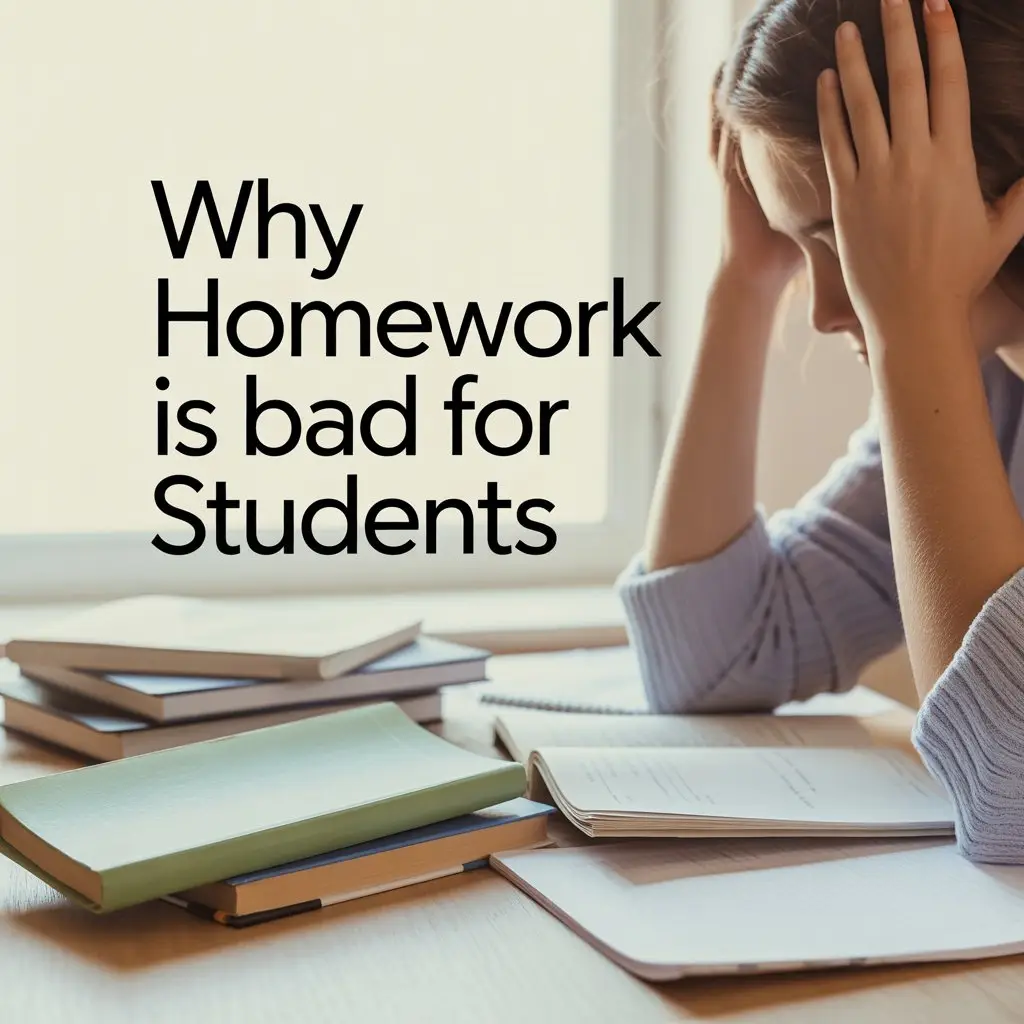
Remember that feeling? The Sunday evening dread. The weight of a backpack filled with unfinished assignments, a looming math worksheet, and a history chapter you haven’t even cracked open yet. For generations, we’ve accepted this as a normal part of being a student. A rite of passage. But what if it’s not? What if this Read More
Chat with our experts to get the best quote. Make the payment via online banking, debit/credit cards or through paypal. Recieve an order confirmation number.
Sit back and relax. Your well written, properly referenced research paper will be mailed to your inbox, before deadline. Download the paper. Revise and Submit.
Remember that feeling? The Sunday evening dread. The weight of a backpack filled with unfinished assignments, a looming math worksheet, and a history chapter you haven’t even cracked open yet. For generations, we’ve accepted this as a normal part of being a student. A rite of passage. But what if it’s not? What if this nightly ritual, this thing we call homework, is actually doing more harm than good?
We’ve been told it builds character, reinforces learning, and teaches responsibility. But as we look closer at the rising levels of stress in our children and the mounting pressure they face, it’s time to ask the hard questions. Are we sacrificing our kids’ well-being on the altar of academic tradition?
This isn’t just about complaining about a few extra math problems. It’s about re-examining a fundamental piece of our education system. Let’s dive into the real reasons why homework is bad for students and explore a better path forward for learning.
The Homework Myth: How We Got Here
Before we explore why homework is bad for students, let’s understand how we arrived at this point. The homework tradition didn’t emerge from solid educational research—it evolved from cultural assumptions about discipline, work ethic, and academic rigor.
For decades, parents and teachers believed that more work automatically meant more learning. The logic seemed simple: if kids spend extra hours reviewing material at home, they’ll retain it better and perform higher on tests.
But here’s the problem with that assumption: learning doesn’t work like filling a bucket. The human brain, especially a developing one, needs rest, play, and varied experiences to consolidate information and grow.
Recent studies have begun to challenge the homework paradigm. Research from Stanford University found that too much homework is associated with high stress levels, physical health problems, and a lack of balance in students’ lives. When students reported spending more than two hours on homework per night, the benefits plateaued—and the negative effects began to multiply.
The Physical Toll: When Homework Hurts Bodies
One of the most overlooked aspects of why homework is bad for students is its impact on physical health. Children’s bodies are still developing, and they need adequate sleep, nutrition, and exercise to grow properly.
Sleep Deprivation and Its Consequences
Homework is a major contributor to sleep deprivation among students. High schoolers especially face an impossible equation: seven periods of classes, extracurricular activities, part-time jobs, and then three to four hours of homework each night.
The American Academy of Pediatrics recommends that teenagers get 8-10 hours of sleep per night. Yet studies show that most teens average just 6-7 hours, with homework being a primary culprit.
Sleep deprivation doesn’t just make kids tired—it:
Impairs memory consolidation and learning
Weakens immune system function
Increases risk of depression and anxiety
Affects growth hormone production
Reduces athletic performance and coordination
Impairs decision-making and impulse control
The Sedentary Student Syndrome
After sitting in classrooms for six to eight hours, homework forces students to remain sedentary for additional hours. This lack of physical activity contributes to:
Rising childhood obesity rates
Poor posture and back problems
Eye strain from prolonged screen time
Reduced cardiovascular fitness
Decreased bone density development
Children need to move. Their bodies are designed for activity, exploration, and play. When homework consumes their after-school hours, we’re essentially asking them to override their biological needs in service of questionable academic gains.
The Mental Health Crisis: Homework’s Emotional Burden
Perhaps the most compelling reason why homework is bad for students lies in its devastating impact on mental health. We’re witnessing unprecedented levels of anxiety, depression, and stress-related disorders among children and teenagers—and homework plays a significant role.
Stress and Anxiety: A Growing Epidemic
A survey by the National Education Association found that 56% of students cited homework as a primary source of stress. Think about that for a moment: more than half of all students identify homework as their biggest stressor.
This chronic stress doesn’t just feel unpleasant, it fundamentally alters brain development. When children experience persistent stress, their bodies remain in “fight or flight” mode, flooding their systems with cortisol. Over time, this can lead to:
Difficulty concentrating and focusing
Irritability and mood swings
Panic attacks and anxiety disorders
Depression and feelings of hopelessness
Decreased motivation and academic burnout
I remember speaking with a mother whose eighth-grade son developed such severe homework-related anxiety that he began having panic attacks every Sunday evening in anticipation of the week ahead. This wasn’t a child with learning disabilities or behavioral issues—this was a bright, capable student crushed under the weight of unrealistic expectations.
The Loss of Childhood Joy
Homework doesn’t just steal time—it steals joy. When students spend their after-school hours grinding through worksheets and essays, they miss out on the unstructured play that’s essential for healthy development.
Children need time to:
Explore their own interests and passions
Engage in creative, imaginative play
Build social skills through interaction with peers
Develop independence and self-directed learning
Simply be kids without constant academic pressure
The memories that shape us rarely come from completing homework assignments. They come from building forts, riding bikes until dark, reading books for pleasure, or having meaningful conversations with family. When homework consumes these precious hours, we’re not just reducing learning—we’re diminishing childhood itself.
The Academic Argument: Does Homework Even Work?
Let’s address the elephant in the room: if homework causes all these problems, surely it must deliver significant academic benefits, right?
Not exactly.
The Research Might Surprise You
Duke University professor Harris Cooper, one of the leading researchers on homework effectiveness, conducted comprehensive meta-analyses of homework studies. His findings? The benefits of homework are minimal for elementary students and only modest for middle schoolers.
For young children in elementary school, Cooper found “no evidence” that homework provides any academic benefit. Zero. Yet these same children are being assigned 30-60 minutes of homework per night in many schools.
Even for high school students, where some correlation exists between homework and achievement, the relationship is complex. The benefits plateau around two hours per night, and excessive homework beyond that point actually correlates with lower academic performance.
Quality Over Quantity
When we examine why homework is bad for students from an academic perspective, we often discover it’s not homework itself that’s problematic—it’s the type and quantity of homework being assigned.
Busy work, repetitive drills, and assignments that could easily be completed during class time don’t enhance learning. They just fill time and create frustration.
Meaningful homework should:
Extend classroom learning in creative ways
Allow for student choice and autonomy
Be appropriately challenging without being overwhelming
Take reasonable amounts of time to complete
Connect to students’ real lives and interests
Unfortunately, much of the homework assigned in schools today doesn’t meet these criteria. Instead, it’s often generic, one-size-fits-all assignments that fail to engage students or promote deep learning.
The Family Impact: Homework’s Ripple Effect
Understanding why homework is bad for students requires looking beyond individual children to see how it affects entire families.
Strained Parent-Child Relationships
Homework battles are legendary. Parents find themselves transformed from supportive caregivers into nightly homework enforcers, nagging, bribing, and sometimes yelling to get assignments completed.
This dynamic poisons relationships. Instead of enjoying quality time together after a long day apart, families spend their evenings in conflict over assignments. Parents who work long hours have limited time with their children—and homework consumes much of it.
One father told me he calculated that he spent more time arguing about homework with his daughter than actually talking with her about her day, her feelings, or her dreams. That realization broke his heart.
Equity and Access Issues
Homework also exacerbates educational inequality. Not all students have:
Quiet spaces to work
Adult help when they’re confused
Internet access for research
Supplies and resources
Adequate nutrition to fuel concentration
Affluent students often have tutors, educated parents who can assist, and all the resources they need. Lower-income students frequently struggle without these supports, meaning homework penalizes them for circumstances beyond their control.
Teachers then face the impossible choice: assign homework that privileged students will complete easily but struggling students can’t manage, or assign no homework and potentially disadvantage students in competitive academic environments.
The Global Perspective: Countries Rethinking Homework
The conversation about why homework is bad for students isn’t just happening in the United States. Countries worldwide are reconsidering their homework policies.
Finland, consistently ranked among the top education systems globally, assigns minimal homework. Finnish students typically complete their assignments in school or have less than 30 minutes per night. Yet they outperform American students who often spend three to four times longer on homework.
Several schools in France have eliminated homework for younger students entirely. Spain has seen growing movements to limit or ban homework, with parent associations arguing that children need free time for development.
These international examples suggest that academic excellence and excessive homework aren’t just uncorrelated—they might be inversely related.
Alternatives to Traditional Homework
If homework is problematic, what’s the alternative? Fortunately, progressive educators are pioneering approaches that maintain academic rigor without the negative consequences.
The 10-Minute Rule
Some schools implement the “10-minute rule”: students receive approximately 10 minutes of homework per grade level per night. So a third-grader gets 30 minutes, while a ninth-grader gets 90 minutes. This approach recognizes that homework may have some value for older students while protecting younger children.
Flexible, Choice-Based Assignments
Rather than mandatory worksheets, some teachers offer choice-based projects where students explore topics that interest them. This approach maintains engagement while reducing stress and promoting intrinsic motivation.
In-School Completion Time
Many schools are restructuring their schedules to allow homework completion during the school day. This ensures all students have equal access to support and resources while freeing evenings for family time and rest.
Reading for Pleasure
Perhaps the most effective “homework” is simply encouraging daily reading for enjoyment. This single activity builds vocabulary, comprehension, imagination, and a love of learning—without the stress or negative side effects of traditional homework.
Moving Forward: What Parents and Educators Can Do
Understanding why homework is bad for students is just the first step. Creating change requires action from both parents and educators.
For Parents
You have more power than you might think:
Communicate with teachers about homework concerns
Advocate for reasonable homework policies at school board meetings
Set limits on homework time regardless of completion
Prioritize your child’s health and wellbeing over perfect assignment completion
Trust your instincts when homework feels excessive or harmful
For Educators
Teachers can lead the charge for meaningful change:
Evaluate whether each assignment truly serves learning goals
Consider alternatives to traditional homework
Be willing to experiment with reduced or no homework
Listen to student and parent feedback about homework load
Focus on the quality of assignments rather than quantity
A Better Way Forward: Reimagining Learning After the Bell
So, if we acknowledge the many reasons why homework is bad for students, what’s the alternative? It’s not about abandoning rigor or accountability. It’s about being smarter and more intentional about how we reinforce learning.
Here are a few ideas that schools and educators are already exploring:
“Flipping” the Classroom: Students watch instructional videos at home (a short, defined task), and then “homework” (practice, labs, projects) is done in the classroom with the teacher’s support.
Focus on Reading: Instead of worksheets, the only “homework” is to read for pleasure for 20-30 minutes each night. The benefits of reading for vocabulary, comprehension, and empathy are immense and well-documented.
Long-Term Projects: Instead of daily assignments, students can work on one meaningful project over several weeks, allowing them to manage their time and delve deeply into a topic they care about.
No Homework Policies: Some forward-thinking schools have eliminated traditional homework entirely, especially in elementary grades, and have seen no drop in academic performance. Instead, they see a rise in student engagement and well-being.
The conversation around why homework is bad for students isn’t about making school “easier.” It’s about making it better. It’s about recognizing that true learning doesn’t stop and start with a worksheet. It happens when a child is healthy, happy, and has the time and space to be curious about the world.
It’s time to let our kids put down the pencil after a long day at school, look up, and see the world waiting for them. It’s time to give them back their evenings, their families, and their childhood.
The Hidden Costs of Homework on Students’ Well-Being
Homework is about academics—but it affects more than just grades. Here’s how it impacts broader aspects of a student’s life:
Sleep deprivation: Late-night homework leads to fewer hours of sleep, affecting concentration and mood.
Loss of physical activity: Time spent sitting at a desk doing homework often replaces time that could be spent moving, which is vital for health.
Reduced social interaction: Homework can limit opportunities for friends and social development.
Decreased motivation: When learning feels like an endless chore, students may lose interest in school altogether.
Real Stories: How Homework Affected Students’ Lives
Take Mia, a 13-year-old who loved science but dreaded homework nights. She would finish her school day exhausted, then face two hours of assignments that left her too tired to explore her interests or hang out with family. Over time, Mia’s love for learning dimmed under the weight of relentless homework.
Or consider Alex, whose family didn’t have reliable Wi-Fi. Homework requiring internet research became a daily source of stress and lowered his confidence. His teachers didn’t realize these struggles when assigning work online.
These stories highlight how homework isn’t just a task—it shapes students’ experiences and attitudes toward education.
Alternatives to Homework That Support Students
If homework harms students more than it helps, what can replace it? Here are some practical alternatives educators are exploring:
In-class practice: Allow students to practice and get feedback during school hours rather than at home.
Project-based learning: Encourages students to engage deeply with material without the pressure of repetitive assignments.
Reading for pleasure: Promoting independent reading supports learning without stress.
Flipped classrooms: Students watch instructional videos at home and do activities in class with teacher support.
Flexible deadlines and optional work: Tailoring assignments to individual needs reduces anxiety.
How Parents and Students Can Push Back Against Excessive Homework
If homework feels overwhelming, families can take steps to advocate for change:
Talk with teachers to understand the purpose of assignments and discuss workloads.
Establish clear boundaries to create homework-free family time.
Encourage schools to adopt research-backed homework policies.
Support students with time management and stress-relief techniques.
Why Homework Is Bad for Students: Rethinking the Future of Education
As society evolves, so should education. The conversation about homework is part of a larger shift toward student-centered learning. Emphasizing creativity, mental health, and real-world skills can complement academic goals far better than piles of assignments.
Imagine classrooms where learning is exciting, relevant, and balanced—where students thrive both in and out of school.
Key Takeaways: Why Homework Is Bad for Students
Homework often increases stress and undermines mental health.
It invades leisure, family time, and opportunities for rest and play.
The academic benefits of homework, especially in large volumes, are questionable.
It perpetuates inequalities due to unequal home environments.
Alternative teaching methods show promising outcomes with less or no homework.









 Evan John