Every Nursing Student Must Know
Temperature · Pulse · Respirations · Blood Pressure · Oxygen Saturation · Pain · Consciousness
Vital signs are the cornerstone of nursing assessment. They are the most fundamental, frequently measured, and clinically significant indicators of a patient’s physiological status. The ability to accurately measure vital signs, immediately recognise abnormal values, interpret trends over time, and respond appropriately is one of the most important skills a nursing student will develop and one they will use at every single patient encounter throughout their career. This vital signs for nursing students provides a comprehensive reference for normal vital sign ranges across all age groups, clinical definitions of abnormal findings, the physiological basis for each vital sign, and clear guidance on when and how to escalate concerning values.
| How to Use This Guide
This guide is organised by each vital sign. For each one you will find:
• Normal ranges by age group (neonate through older adult)
• Traffic-light status table: Normal / Concerning / Critical
• Physiological explanation of what the vital sign measures
• Common causes of abnormal readings
• Nursing assessment and escalation guidance
• Factors that affect the measurement
Values in this guide represent widely accepted clinical reference ranges. Always apply your institution’s specific normal ranges and escalation thresholds, which may differ slightly. |
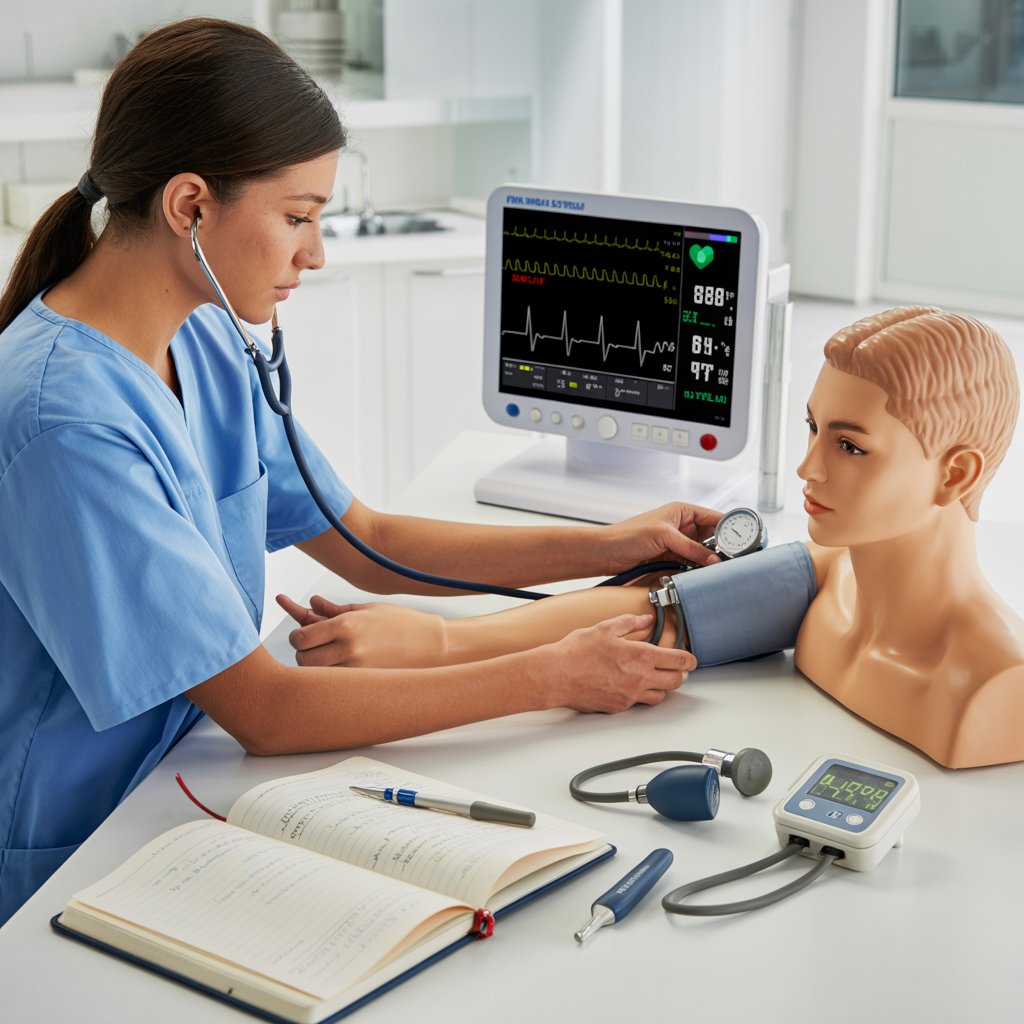
Master Quick Reference: Vital Signs at a Glance
The table below provides the core normal ranges for a healthy adult. Detailed age-specific ranges and clinical context follow in each dedicated section.
| Vital Sign |
Normal Adult Range |
Unit |
Concerning |
Critical / Immediate Action Required |
| Temperature (oral) |
36.1 – 37.2 |
°C |
< 36.0 or 37.3 – 38.0 |
< 35.0 (hypothermia) or ≥ 38.5 (fever/sepsis) or ≥ 41.0 (hyperpyrexia) |
| Heart Rate (pulse) |
60 – 100 |
bpm |
51 – 59 or 101 – 109 |
< 50 (severe bradycardia) or > 130 (tachycardia with symptoms) |
| Respiratory Rate |
12 – 20 |
breaths/min |
9 – 11 or 21 – 24 |
< 8 (respiratory depression) or > 25 (respiratory distress) |
| Systolic BP |
90 – 139 |
mmHg |
140 – 159 (Stage 1 HTN) or 80–89 |
< 70 (shock) or ≥ 180 (hypertensive crisis) |
| Diastolic BP |
60 – 89 |
mmHg |
90 – 99 |
< 40 or ≥ 120 (hypertensive emergency) |
| SpO2 (pulse oximetry) |
95 – 100 |
% |
91 – 94 |
< 90 (significant hypoxaemia — urgent O2 and assessment) |
| Blood Glucose (fasting) |
4.0 – 5.5 |
mmol/L |
5.6 – 6.9 (pre-diabetes) |
< 3.0 (hypoglycaemia) or > 20.0 (hyperglycaemic emergency) |
| Urine Output |
≥ 0.5 mL/kg/hr |
mL/kg/hr |
0.3 – 0.5 for > 2 hours |
< 0.3 mL/kg/hr or anuria (suggest renal hypoperfusion) |
| GCS (consciousness) |
15/15 |
points |
13 – 14 |
≤ 8 (unable to protect airway — immediate escalation) |
| Pain Score (NRS) |
0 (no pain) |
0 – 10 |
4 – 6 (moderate) |
7 – 10 (severe — immediate assessment and intervention) |
| Colour Key for This Guide
■ GREEN ranges = Normal / Within expected parameters
■ AMBER ranges = Concerning / Requires enhanced monitoring and clinical review
■ RED ranges = Critical / Requires immediate nursing assessment and medical escalation |
Vital Sign 1: Temperature (T)
| T |
Body Temperature
Core body heat — reflects metabolic activity and thermoregulatory balance |
What Temperature Measures
Body temperature reflects the balance between heat production (from cellular metabolism) and heat loss (via radiation, convection, conduction, and evaporation). It is regulated by the hypothalamus, which acts as the body’s thermostat. Core body temperature is maintained within a narrow range to optimise enzymatic function and cellular processes.
Normal Ranges by Age Group
| Age Group |
Normal Range (°C) |
Normal Range (°F) |
Clinical Note |
| Neonate (0–28 days) |
36.5 – 37.5 |
97.7 – 99.5 |
Thermoregulation immature; highly vulnerable to hypothermia and hyperthermia |
| Infant (1–12 months) |
36.5 – 37.5 |
97.7 – 99.5 |
Rectal temperature most accurate in infants |
| Toddler / Child (1–12 yr) |
36.1 – 37.7 |
97.0 – 99.9 |
Tympanic or axillary common in clinical settings; fever threshold ≥ 38.0°C |
| Adolescent (13–17 yr) |
36.1 – 37.4 |
97.0 – 99.3 |
Approaching adult values; oral measurement appropriate |
| Adult (18–64 yr) |
36.1 – 37.2 |
97.0 – 99.0 |
Oral: standard. Diurnal variation: lowest at 0600, highest at 1800 |
| Older Adult (65+) |
35.8 – 37.0 |
96.4 – 98.6 |
Lower baseline; fever may be blunted; hypothermia risk higher; infection may present without fever |
Temperature Status: Traffic Light
| Value (°C) |
Clinical Term |
Status / Action |
| < 35.0 |
Hypothermia (moderate–severe) |
CRITICAL — active rewarming, continuous monitoring, medical review immediately |
| 35.0 – 35.9 |
Mild hypothermia / low normal |
Concerning — passive rewarming, increase monitoring frequency, assess cause |
| 36.0 – 37.2 |
Normal |
Normal — document and continue routine monitoring |
| 37.3 – 37.9 |
Low-grade fever / pyrexia |
Concerning — increase monitoring, assess for infection, report to medical team |
| 38.0 – 38.9 |
Fever (pyrexia) |
CRITICAL — assess for sepsis, blood cultures, antipyretics per order, fluid assessment, escalate |
| ≥ 39.0 |
High fever |
CRITICAL — urgent medical review, sepsis screen, cooling measures, continuous monitoring |
| ≥ 41.0 |
Hyperpyrexia |
CRITICAL EMERGENCY — immediate medical team, ice packs, IV access, sepsis/heat stroke protocol |
Measurement Sites and Accuracy
| Site |
Method |
Accuracy vs Core Temp |
Best Used In |
| Rectal |
Rectal thermometer |
Most accurate (±0.1°C) |
Neonates, infants, unconscious adults |
| Oral |
Under tongue, mouth closed |
Accurate (±0.2°C) |
Cooperative adults and older children; wait 30 min after eating/drinking |
| Axillary |
Under arm, arm adducted |
Least accurate (±0.5°C); may read ~0.5°C lower than core |
Screening; not for critical decisions |
| Tympanic |
Ear canal |
Accurate if technique correct (±0.3°C) |
Children, adults; pull pinna up and back (adults); error with otitis media or wax |
| Temporal |
Forehead temporal artery |
Moderate accuracy (±0.3°C) |
Convenient; affected by sweating |
| Oesophageal/rectal/bladder catheter |
ICU invasive probe |
True core temperature |
ICU, perioperative, haemodynamically unstable patients |
| Key Nursing Actions for Abnormal Temperature
FEVER (≥ 38.0°C):
• Assess for source of infection: examine wound sites, IV lines, urinary catheter, chest, abdomen
• Notify medical team; obtain blood cultures before antibiotics if sepsis suspected
• Administer prescribed antipyretics (paracetamol); avoid aspirin in children (Reye syndrome risk)
• Encourage oral fluids or IV hydration; fever increases insensible fluid losses
• Remove excess clothing and blankets; fan if tolerated
• Reassess temperature 30–60 min after antipyretic administration
HYPOTHERMIA (< 35.0°C):
• Remove wet clothing; apply warm blankets; increase room temperature
• Warm IV fluids if ordered; warmed humidified O2
• Monitor for cardiac arrhythmias (hypothermia is a significant arrhythmia trigger)
• Do not massage extremities (risk of cold blood entering core circulation)
• Continuous cardiac monitoring; escalate urgently |
| Vital Sign 2: Heart Rate / Pulse (HR) |
| HR |
Heart Rate / Pulse
The frequency and character of cardiac contraction — rate, rhythm, volume, and regularity |
What Heart Rate Measures
Heart rate reflects the number of cardiac contractions per minute. Pulse assessment goes beyond rate alone ,a complete pulse assessment includes rate, rhythm (regular or irregular), volume/amplitude (strong, weak, bounding, thready), and equality (comparing bilateral pulses). The pulse is the peripheral manifestation of cardiac output and vascular resistance.
Normal Ranges by Age Group
| Age Group |
Normal HR (bpm) |
Bradycardia Threshold |
Tachycardia Threshold |
| Neonate (0–28 days) |
100 – 160 |
< 100 |
> 160 |
| Infant (1–12 months) |
100 – 160 |
< 100 |
> 160 |
| Toddler (1–3 yr) |
90 – 150 |
< 90 |
> 150 |
| Preschool (3–5 yr) |
80 – 140 |
< 80 |
> 140 |
| School age (6–12 yr) |
70 – 120 |
< 70 |
> 120 |
| Adolescent (13–17 yr) |
60 – 100 |
< 60 |
> 100 |
| Adult (18–64 yr) |
60 – 100 |
< 60 |
> 100 |
| Well-trained athlete (adult) |
40 – 60 |
< 40 |
> 100 (lower threshold) |
| Older Adult (65+) |
60 – 100 |
< 55 |
> 100 (may be less physiologically tolerated) |
Heart Rate Status: Traffic Light (Adults)
| HR (bpm) |
Clinical Term |
Status / Action |
| < 40 |
Severe bradycardia |
CRITICAL EMERGENCY — assess consciousness, BP; prepare atropine; call emergency team |
| 40 – 59 |
Bradycardia |
Concerning — assess symptoms (dizziness, chest pain, syncope); 12-lead ECG; notify medical team |
| 60 – 100 |
Normal |
Normal — document, continue routine monitoring |
| 101 – 120 |
Mild tachycardia |
Concerning — assess cause (pain, fever, hypovolaemia, anxiety); treat underlying cause; monitor trend |
| 121 – 150 |
Moderate tachycardia |
CRITICAL — 12-lead ECG urgently; assess haemodynamic stability; escalate to medical team |
| > 150 |
Severe tachycardia |
CRITICAL EMERGENCY — immediate medical team; continuous cardiac monitoring; IV access |
Causes of Abnormal Heart Rate
| Finding |
Common Causes |
Key Nursing Assessment |
| Bradycardia |
Athlete’s heart, hypothyroidism, hypothermia, increased ICP, AV block, digoxin toxicity, beta-blocker overdose, inferior MI, vasovagal episode |
Assess: symptoms (dizziness, syncope, chest pain), BP, SpO2; review medications (beta-blockers, digoxin, calcium channel blockers); 12-lead ECG |
| Tachycardia |
Pain, anxiety, fever, haemorrhage/hypovolaemia, anaemia, sepsis, PE, hyperthyroidism, heart failure, SVT/AF/VT, caffeine/stimulants, dehydration |
Assess: pain score, temperature, BP (low BP + tachycardia = shock until proven otherwise), SpO2, rhythm on monitor; fluid status; 12-lead ECG |
| Irregular rhythm |
Atrial fibrillation (most common), ectopic beats, heart blocks, SVT |
Always assess apical pulse for 60 seconds; note pulse deficit (apical vs radial difference); 12-lead ECG; anticoagulation status if AF |
| Critical Assessment: Tachycardia + Hypotension = Shock Until Proven Otherwise
When a patient presents with both tachycardia (HR > 100) AND hypotension (SBP < 90 mmHg), assume haemodynamic compromise and act immediately:
1. Call for help / activate rapid response
2. Establish large-bore IV access x2
3. Obtain 12-lead ECG and continuous monitoring
4. Assess for source: bleeding (trauma, GI, post-partum), sepsis, cardiac failure, tension pneumothorax, PE, anaphylaxis
5. Administer fluid challenge (250–500 mL NaCl 0.9%) if hypovolaemia is the likely cause, per medical order
6. Do NOT leave the patient alone until help arrives |
| Vital Sign 3: Respiratory Rate (RR) |
| RR |
Respiratory Rate
The most sensitive early warning vital sign — often the first to change in deterioration |
What Respiratory Rate Measures
Respiratory rate (RR) counts the number of complete breaths (one inhalation + one exhalation) per minute. It is the most sensitive and earliest-changing vital sign in clinical deterioration — yet it is the most frequently omitted or inaccurately measured vital sign in clinical practice. Studies consistently show that an elevated RR is the strongest single predictor of adverse events including cardiac arrest, ICU admission, and in-hospital mortality.
A complete respiratory assessment includes: rate, rhythm (regular or irregular), depth (normal, shallow, deep), and effort (accessory muscle use, nasal flaring, intercostal recession, tracheal tug).
Normal Ranges by Age Group
| Age Group |
Normal RR (breaths/min) |
Tachypnoea Threshold |
Clinical Note |
| Neonate (0–28 days) |
30 – 60 |
> 60 |
Periodic breathing (irregular rhythm) is normal in neonates; apnoea > 20 seconds is abnormal |
| Infant (1–12 months) |
25 – 50 |
> 50 |
Count for a full 60 seconds; abdominal breathing normal in infants |
| Toddler (1–3 yr) |
20 – 40 |
> 40 |
Diaphragmatic breathing predominant; accessory muscle use is always abnormal |
| Preschool (3–5 yr) |
20 – 30 |
> 30 |
Observe for subcostal recession and nasal flaring as signs of increased work of breathing |
| School age (6–12 yr) |
18 – 26 |
> 26 |
Approaching adult pattern; chest movement visible |
| Adolescent (13–17 yr) |
12 – 22 |
> 22 |
Adult values; thoracic breathing predominant |
| Adult (18–64 yr) |
12 – 20 |
> 20 |
Count for 60 seconds; do not tell the patient what you are counting (alters rate) |
| Older Adult (65+) |
12 – 20 |
> 20 |
May have reduced respiratory reserve; earlier deterioration with respiratory illness |
Respiratory Rate Status: Traffic Light (Adults)
| RR (breaths/min) |
Clinical Term |
Status / Action |
| < 8 |
Severe bradypnoea / respiratory depression |
CRITICAL EMERGENCY — stimulate patient, apply O2, prepare bag-mask ventilation, call emergency team; consider opioid reversal (naloxone) |
| 8 – 11 |
Bradypnoea |
CRITICAL — immediate assessment of consciousness and oxygenation; medical review urgently; O2 therapy |
| 12 – 20 |
Normal |
Normal — document, continue routine monitoring |
| 21 – 24 |
Mild tachypnoea |
Concerning — assess for cause (pain, anxiety, fever, early infection); increase monitoring frequency |
| 25 – 29 |
Moderate tachypnoea |
CRITICAL — urgent medical review; oxygen therapy; full respiratory and haemodynamic assessment; consider MET call |
| ≥ 30 |
Severe tachypnoea / respiratory distress |
CRITICAL EMERGENCY — immediate escalation; MET/RRT activation; continuous SpO2 and cardiac monitoring; O2 and positioning |
Patterns of Breathing
| Pattern |
Description |
Clinical Significance |
| Eupnoea |
Normal rate, depth, and rhythm (12–20 breaths/min in adult) |
Normal |
| Tachypnoea |
RR > 20 in adults; shallow or normal depth |
Fever, pain, anxiety, early respiratory failure, sepsis, PE, heart failure |
| Bradypnoea |
RR < 12 in adults; normal or deep breaths |
Opioid sedation, CNS depression, metabolic alkalosis, raised ICP |
| Hyperventilation |
Increased rate AND depth; excess CO2 eliminated → respiratory alkalosis |
Anxiety, pain, DKA (Kussmaul), PE, salicylate poisoning, hypoxia compensation |
| Kussmaul |
Deep, laboured, regular; rapid or normal rate; ‘air hunger’ |
Severe metabolic acidosis, especially DKA; the body compensating by blowing off CO2 |
| Cheyne-Stokes |
Waxing/waning depth, periodic apnoea of 10–60 sec; cyclical pattern |
Raised ICP, heart failure, uraemia, stroke, opioid use, high altitude |
| Biot’s (Ataxic) |
Completely irregular rate and depth; unpredictable pattern |
Severe brainstem damage (medullary compression); pre-terminal breathing pattern |
| Apnoea |
Cessation of breathing for > 10 seconds (or any time in neonate) |
EMERGENCY — airway obstruction, cardiac arrest, opioid overdose, CNS failure |
| How to Count Respirations Accurately
1. After counting the pulse, keep fingers on the patient’s wrist as if still counting the pulse
2. Observe chest rise — count each complete rise and fall as ONE breath
3. Count for a FULL 60 seconds (30-second counts and doubling introduce significant error)
4. Do NOT tell the patient you are counting respirations — patients who know they are being observed alter their breathing pattern
5. Assess depth, rhythm, and effort simultaneously
6. In obese patients or those with subtle breathing, place hand lightly on the chest or abdomen |
| Vital Sign 4: Blood Pressure (BP) |
| BP |
Blood Pressure
The force exerted by circulating blood against arterial walls — reflects cardiac output and vascular resistance |
What Blood Pressure Measures
Blood pressure (BP) is the force exerted by circulating blood on the walls of the arteries. It is expressed as two values: systolic BP (SBP) — the peak pressure when the left ventricle contracts — and diastolic BP (DBP) — the resting pressure between contractions. Mean Arterial Pressure (MAP) represents the average pressure throughout the cardiac cycle and is the key measure of tissue perfusion.
MAP = DBP + (1/3 × Pulse Pressure) OR MAP = (SBP + 2 × DBP) / 3 | Normal MAP: 70 – 100 mmHg. MAP < 65 mmHg indicates insufficient organ perfusion.
Normal Ranges by Age Group
| Age Group |
Normal SBP (mmHg) |
Normal DBP (mmHg) |
Hypotension Threshold (SBP) |
Hypertension Threshold (SBP) |
| Neonate term |
60 – 90 |
30 – 60 |
< 60 |
> 90 |
| Infant (1–12 months) |
80 – 100 |
50 – 70 |
< 70 |
> 100 |
| Toddler (1–3 yr) |
86 – 106 |
42 – 63 |
< 70+age×2 |
> 106 |
| School age (6–12) |
97 – 120 |
57 – 80 |
< 80 |
> 120 |
| Adolescent (13–17) |
112 – 128 |
66 – 80 |
< 90 |
> 130 |
| Adult (18–64) |
90 – 139 |
60 – 89 |
< 90 |
≥ 140/90 |
| Older Adult (65+) |
90 – 149* |
60 – 89 |
< 90 |
≥ 140/90 (target may be higher) |
*Older adults often have higher SBP due to arterial stiffness. Target ranges in elderly patients are individualised — tight control may increase fall risk.
Blood Pressure Classification (Adults — AHA/ACC 2017)
| Category |
Systolic (mmHg) |
Diastolic (mmHg) |
Action Required |
| Normal |
< 120 |
< 80 |
Maintain healthy lifestyle; routine monitoring |
| Elevated |
120 – 129 |
< 80 |
Lifestyle advice; monitor every 3–6 months |
| Stage 1 Hypertension |
130 – 139 |
80 – 89 |
Document; lifestyle modification; review medications; GP follow-up |
| Stage 2 Hypertension |
≥ 140 |
≥ 90 |
Notify medical team; initiate or review antihypertensive therapy |
| Hypertensive Urgency |
≥ 180 |
≥ 120 (no end-organ damage) |
Urgent medical review within hours; monitor closely; gradual BP reduction |
| Hypertensive Emergency |
≥ 180 |
≥ 120 (WITH end-organ damage) |
CRITICAL EMERGENCY — immediate IV antihypertensives; ICU; continuous arterial monitoring |
| Hypotension |
< 90 |
|
Assess symptoms, HR, MAP; IV access; fluid challenge if ordered; escalate to medical team |
| Septic Shock |
< 90 (despite fluids) |
|
CRITICAL EMERGENCY — immediate resuscitation, vasopressors, sepsis bundle, ICU |
Accurate BP Measurement: Key Principles
- Patient should be seated or lying quietly for 5 minutes before measurement; no caffeine, exercise, or smoking for 30 minutes
- Arm supported at heart level; cuff at 2–3 cm above antecubital fossa; bladder centred over brachial artery
- Cuff size critical: bladder width should be 40% and length 80% of the arm circumference; too small = falsely high reading; too large = falsely low
- Inflate to 20–30 mmHg above palpated systolic; deflate at 2 mmHg/sec
- Record to nearest 2 mmHg; record both arms on first assessment; use higher arm for subsequent readings
- Postural (orthostatic) BP: measure lying then standing after 1–3 minutes — drop of ≥ 20 mmHg systolic or ≥ 10 mmHg diastolic = orthostatic hypotension
- Auscultatory gap (silent interval within Korotkoff sounds) is common in older adults; may falsely underestimate SBP if not recognised
| Conditions That Affect BP Measurement Accuracy
Arrhythmias (especially AF): use the average of 3 readings; automated devices are unreliable in AF — manual auscultation preferred
Peripheral vascular disease or subclavian stenosis: measure both arms; use the higher reading
Lymphoedema or AV fistula: never take BP in the affected arm
Obesity: ensure appropriate large cuff size; standard cuff on a large arm overestimates BP by up to 20 mmHg
Aortic regurgitation / arteriovenous malformations: widened pulse pressure; diastolic may be very low |
| Vital Sign 5: Oxygen Saturation (SpO2) |
| SpO2 |
Oxygen Saturation (Pulse Oximetry)
The percentage of haemoglobin saturated with oxygen — the 5th vital sign |
What SpO2 Measures
Pulse oximetry (SpO2) measures the percentage of haemoglobin molecules in arterial blood that are carrying oxygen. It provides a non-invasive, continuous estimate of arterial oxygen saturation (SaO2) — the gold standard, which requires arterial blood gas (ABG) analysis. SpO2 is one of the most valuable and widely used bedside monitoring tools in nursing.
Important: SpO2 measures haemoglobin saturation, NOT the adequacy of ventilation. A patient can have a normal SpO2 while retaining dangerous levels of CO2 (hypercapnia). In patients at risk of CO2 retention (COPD, chronic hypoventilation), SpO2 alone is insufficient — end-tidal CO2 or ABG is required.
SpO2 Normal Ranges and Status
| SpO2 (%) |
Clinical Classification |
Status / Action |
| 95 – 100 |
Normal oxygenation |
Normal — document; maintain ambient air or prescribed O2 therapy |
| 94 |
Lower limit of normal |
Concerning — increase monitoring; reassess clinical context; notify if new or unexpected |
| 91 – 94 |
Mild hypoxaemia |
Concerning — initiate or increase supplemental O2; position upright; increase monitoring; notify medical team |
| 86 – 90 |
Moderate hypoxaemia |
CRITICAL — O2 therapy urgently; full respiratory assessment; consider non-invasive ventilation; escalate immediately |
| < 85 |
Severe hypoxaemia |
CRITICAL EMERGENCY — maximum O2 therapy; bag-mask if inadequate; call emergency team; prepare for intubation |
Special context: In COPD patients with chronic hypercapnia, the target SpO2 is 88–92% to avoid suppressing the hypoxic drive to breathe. Always check for documented target range.
Factors That Affect SpO2 Accuracy
| Factor |
Effect on Reading |
Clinical Action |
| Poor peripheral perfusion (cold, vasoconstriction, shock) |
Falsely low or no reading |
Warm the digit; try earlobe or forehead probe; confirm with ABG |
| Nail polish (dark colours — blue, black, dark red) |
Falsely low reading |
Remove polish from one digit; use alternative site |
| Carbon monoxide poisoning (CO poisoning) |
FALSELY NORMAL / HIGH reading |
Pulse oximetry is unreliable; ABG with co-oximetry required; give 100% O2 |
| Severe anaemia |
May show normal SpO2 despite poor O2 delivery (low Hb carries less O2 overall) |
Clinical assessment + Hb level; consider transfusion threshold |
| Patient movement / shivering |
Inaccurate fluctuating readings |
Ask patient to keep still; use a different probe site; consider waveform quality |
| Bright ambient light (direct sunlight or phototherapy) |
May cause false readings |
Shield the probe from direct light |
| Methaemoglobinaemia |
SpO2 reads approximately 85% regardless of true level |
ABG with co-oximetry; methylene blue treatment |
| Oxygen Therapy: Target Ranges
NOT all patients have the same oxygen target. Check the prescription or patient notes:
• Most acutely unwell patients: Target SpO2 94–98%
• COPD / chronic hypercapnic respiratory failure: Target SpO2 88–92%
• Neonates: Target SpO2 91–95% (hyperoxia causes retinopathy of prematurity)
• Post-cardiac arrest: Target SpO2 94–98% (avoid hyperoxia which is associated with worse outcomes)
• Sickle cell crisis: Target SpO2 ≥ 95% to prevent sickling
Always titrate O2 to achieve the prescribed target range — both hypoxia AND hyperoxia cause patient harm. |
Vital Sign 6: Level of Consciousness : GCS & AVPU
| GCS |
Level of Consciousness
Glasgow Coma Scale (GCS) and AVPU — assess neurological status and brain function |
Glasgow Coma Scale (GCS)
The Glasgow Coma Scale (GCS) is the most widely used standardised tool for assessing and communicating level of consciousness. It assesses three independent components — Eye Opening, Verbal Response, and Motor Response — and generates a total score from 3 (deep unresponsive coma) to 15 (fully alert and oriented).
| Component |
Response |
Score |
| Eye Opening (E) |
Spontaneously (opens eyes without stimulation) |
4 |
|
To verbal command (opens eyes when spoken to) |
3 |
|
To pain (opens eyes in response to painful stimulus) |
2 |
|
No response (does not open eyes to any stimulus) |
1 |
| Verbal Response (V) |
Oriented (knows who they are, where they are, what time/date it is) |
5 |
|
Confused (conversational speech but not fully oriented) |
4 |
|
Inappropriate words (random words, no conversational speech) |
3 |
|
Incomprehensible sounds (moaning, groaning only) |
2 |
|
No response |
1 |
| Motor Response (M) |
Obeys commands (moves limbs on request) |
6 |
|
Localises pain (purposeful movement toward the source of pain) |
5 |
|
Withdrawal from pain (normal flexion away from stimulus) |
4 |
|
Abnormal flexion (decorticate: wrist and arm flexion in response to pain) |
3 |
|
Extension (decerebrate: arm and leg extension to pain) |
2 |
|
No response |
1 |
GCS Interpretation
| GCS Score |
Clinical Interpretation |
Status / Action |
| 15 |
Fully alert and oriented |
Normal — document, continue monitoring |
| 13 – 14 |
Minor impairment |
Concerning — increase monitoring; neurological observations; notify medical team; assess cause |
| 9 – 12 |
Moderate impairment |
CRITICAL — urgent medical review; escalate; continuous monitoring; aspiration risk assessment; positioning |
| ≤ 8 |
Severe impairment (coma) |
CRITICAL EMERGENCY — airway at risk; immediate escalation; anaesthesia review for airway protection; ICU |
| 3 |
Deepest coma (no response in any domain) |
CRITICAL EMERGENCY — immediate resuscitation assessment; check for reversible causes |
AVPU Scale — Rapid Bedside Assessment
The AVPU scale is a rapid, simplified screening tool used in initial assessment and between full GCS assessments. It is quicker to perform and communicate but less sensitive to subtle changes.
| AVPU Level |
Description |
Approximate GCS Equivalent |
Action |
| A — Alert |
Patient is awake, aware, and responds appropriately |
GCS 15 |
Normal — continue monitoring |
| V — Voice |
Patient responds to verbal stimulation (opens eyes, moves, or speaks when spoken to) |
GCS ~12–14 |
Concerning — full GCS assessment; medical review |
| P — Pain |
Patient responds only to painful stimulus (sternal rub, nail bed pressure) |
GCS ~8–11 |
CRITICAL — urgent escalation; airway assessment; continuous monitoring |
| U — Unresponsive |
No response to any stimulus |
GCS ≤ 8 |
CRITICAL EMERGENCY — call emergency team; airway; CPR assessment |
| Causes of Altered Consciousness: Use AEIOU-TIPS Mnemonic
A — Alcohol / Acidosis
E — Epilepsy / Endocrine (DKA, hyperosmolar states, adrenal crisis)
I — Infection (meningitis, encephalitis, septic encephalopathy)
O — Overdose / Opioids
U — Uraemia (renal failure) / Underdose (hypoglycaemia)
T — Trauma (head injury, intracranial haemorrhage)
I — Insulin (hypo- or hyperglycaemia)
P — Psychiatric / Poisoning
S — Stroke / Shock / Structural (raised ICP, herniation) |
| P |
Pain Score
Pain is the 5th vital sign — self-report is the most valid measure of pain intensity |
Pain as a Vital Sign
Pain is widely recognised as the fifth vital sign. The American Pain Society’s campaign to have pain routinely assessed and documented alongside temperature, pulse, respirations, and BP reflects a fundamental principle: pain that is not assessed is pain that cannot be treated. Regular pain assessment is a standard of care in every clinical setting.
Pain Scales by Patient Population
| Scale |
Population |
How to Use |
Scoring |
| NRS (Numeric Rating Scale) |
Adults, cognitively intact adolescents |
Ask: ‘On a scale of 0 to 10, where 0 is no pain at all and 10 is the worst pain you can imagine, what is your pain right now?’ |
0 = none; 1–3 = mild; 4–6 = moderate; 7–10 = severe |
| VAS (Visual Analogue Scale) |
Adults |
Patient marks a point on a 10 cm line from ‘no pain’ to ‘worst possible pain’ |
Measured in mm (0–100); < 30 = mild; 30–70 = moderate; > 70 = severe |
| Wong-Baker FACES |
Children 3 yr+, adults with cognitive impairment, language barriers |
Show six faces from smiling (0) to crying (10); ask patient to point to the face that shows their pain |
0 = no pain; 2 = hurts a little; 4 = hurts a bit more; 6 = hurts even more; 8 = hurts a whole lot; 10 = hurts worst |
| FLACC Scale |
Infants and children < 3 yr (or non-verbal) |
Observe: Face (0–2), Legs (0–2), Activity (0–2), Cry (0–2), Consolability (0–2) |
0 = comfortable; 1–3 = mild; 4–6 = moderate; 7–10 = severe |
| BPS (Behavioural Pain Scale) |
Intubated/sedated ICU adults |
Score: Facial expression (1–4), Upper limbs (1–4), Compliance with ventilator (1–4) |
3 = no pain; 4–5 = manageable; > 6 = unacceptable pain |
| CPOT (Critical Care Pain Observation Tool) |
Non-verbal critically ill adults |
Score 4 domains: facial expression, body movements, muscle tension, compliance/vocalisation |
0–2 per domain; total 0–8; ≥ 3 = significant pain requiring treatment |
Pain Assessment: PQRSTU Framework
| Letter |
Stands For |
Questions to Ask |
| P |
Provocation / Palliation |
What makes it worse? What makes it better? What were you doing when it started? |
| Q |
Quality / Character |
Can you describe the pain? Is it sharp, dull, burning, stabbing, aching, throbbing, squeezing, cramping? |
| R |
Region / Radiation |
Where is it exactly? Does it go anywhere else (radiate to shoulder, jaw, arm, back)? |
| S |
Severity |
On a scale of 0 to 10, how bad is it now? At its worst? At its best? |
| T |
Time / Temporal pattern |
When did it start? Is it constant or does it come and go? How long does each episode last? Getting better or worse? |
| U |
Understanding / Impact |
What do you think is causing the pain? How is it affecting your daily life, sleep, activities? |
| Vital Sign 8: Blood Glucose Level (BGL) |
| BGL |
Blood Glucose Level
Essential for diabetic patients, critically ill, and anyone on insulin or glucose-affecting therapies |
Blood Glucose Normal Ranges
| Timing / Clinical Context |
Normal Range (mmol/L) |
Action Threshold |
| Fasting (non-diabetic) |
3.9 – 5.5 |
< 3.9 = hypoglycaemia; ≥ 5.6 on repeat = impaired fasting glucose |
| 2-hour post-prandial (non-diabetic) |
< 7.8 |
> 7.8 on repeat = impaired glucose tolerance |
| Target for Type 1 diabetes (before meals) |
4.0 – 7.0 |
< 4.0 = treat hypoglycaemia; > 10 = reassess insulin regimen |
| Target for Type 2 diabetes (before meals) |
4.0 – 7.0 |
Adjust per individualised care plan and HbA1c target |
| Hospitalised general ward patients |
6.0 – 10.0 |
< 4.0 = treat hypoglycaemia urgently; > 10 = notify medical team |
| ICU / critical care target |
6.0 – 10.0 |
Tighter control (4.5–6.0) only with intensive insulin protocols and continuous monitoring |
| Pregnant (gestational diabetes) |
Fasting < 5.3; 1-hr < 7.8; 2-hr < 6.4 |
Strict control essential to reduce fetal macrosomia and complications |
Hypoglycaemia and Hyperglycaemia: Recognition and Action
| Condition |
BGL (mmol/L) |
Signs & Symptoms |
Immediate Nursing Action |
| Mild hypoglycaemia |
3.0 – 3.9 |
Tremor, sweating, hunger, pallor, anxiety, palpitations |
15g fast-acting carbohydrate orally (4 glucose tabs / 150 mL juice / 3 tsp glucose); recheck BGL at 15 min; repeat if still < 4.0 |
| Moderate hypoglycaemia |
2.0 – 2.9 |
Confusion, disorientation, slurred speech, visual disturbance, aggressive behaviour |
Oral glucose if safe to swallow; if impaired consciousness: IV dextrose (50 mL of 50% dextrose) or glucagon IM/SC per order; notify medical team |
| Severe hypoglycaemia |
< 2.0 |
Seizures, unconsciousness, unresponsive |
EMERGENCY: IV access; IV glucose bolus immediately; do NOT give oral glucose; call emergency team; continuous monitoring |
| Hyperglycaemia |
10 – 20 |
Polyuria, polydipsia, fatigue, blurred vision, headache |
Notify medical team; check for ketones; increase insulin per sliding scale or protocol; hydration assessment |
| DKA (Type 1) |
> 14 + ketones |
Kussmaul breathing, fruity breath odour, vomiting, abdominal pain, dehydration, deteriorating conscious state |
EMERGENCY: urgent medical team; IV insulin infusion; aggressive IV fluid replacement; continuous electrolyte monitoring; ICU may be required |
| HONK/HHS (Type 2) |
> 30 (often > 50) |
Severe dehydration, altered consciousness, no significant ketosis |
EMERGENCY: cautious IV fluid replacement (rapid correction causes cerebral oedema); insulin; thrombosis prophylaxis; ICU |
| Vital Sign 9: Urine Output (UO) |
| UO |
Urine Output
A sensitive indicator of renal perfusion, fluid balance, and haemodynamic status |
Normal Urine Output Ranges
| Population |
Normal Range |
Oliguria Threshold |
Clinical Note |
| Adults |
≥ 0.5 mL/kg/hr (typically 30–50 mL/hr) |
< 0.5 mL/kg/hr |
For a 70 kg adult: minimum 35 mL/hr; < 30 mL/hr for 2 hrs = oliguria requiring review |
| Children (>1 yr) |
≥ 1.0 mL/kg/hr |
< 1.0 mL/kg/hr |
Weight-based; much higher urine output per kg than adults |
| Infants (< 1 yr) |
≥ 2.0 mL/kg/hr |
< 2.0 mL/kg/hr |
Neonates and infants have high obligate water losses |
| Post-operative adults |
≥ 0.5 mL/kg/hr |
< 0.5 mL/kg/hr for 2 consecutive hours |
Early oliguria post-op often responds to IV fluid challenge |
| Normal 24-hour total (adult) |
1,000 – 2,000 mL |
< 400 mL/24 hr (oliguria) |
< 100 mL/24 hr = anuria (suggests severe renal failure or obstruction) |
| Causes of Oliguria: Use Pre-Renal / Renal / Post-Renal Framework
PRE-RENAL (inadequate blood flow to kidney) — most common cause:
Hypovolaemia (dehydration, haemorrhage, burns), cardiogenic shock, sepsis, NSAID use, ACE inhibitor + dehydration
→ Urine will be concentrated (high osmolality, high specific gravity) and low in sodium
RENAL (intrinsic kidney damage):
Acute tubular necrosis (ischaemia or nephrotoxins: gentamicin, contrast agents), glomerulonephritis, vasculitis
→ Urine will be dilute (isosthenuric) with high sodium content
POST-RENAL (obstruction to urine flow):
BPH, renal calculi, catheter blockage, tumour, stricture
→ Check catheter patency first a blocked catheter is the most easily corrected cause of apparent anuria in a catheterised patient |
| Early Warning Scores: NEWS2 and Paediatric PEWS |
Early Warning Scores: Putting It All Together
Individual vital signs gain their greatest clinical power when assessed together as a pattern rather than in isolation. Early Warning Score (EWS) systems synthesise multiple vital sign parameters into a single score that triggers standardised escalation responses. NEWS2 (National Early Warning Score 2) is the most widely adopted system for adults in hospitals worldwide.
NEWS2 Scoring System — Adult
| Vital Sign |
Score 3 |
Score 2 |
Score 1 |
Score 0 (Normal) |
Score 1 |
Score 2 |
Score 3 |
| RR (breaths/min) |
≤ 8 |
|
9–11 |
12–20 |
|
21–24 |
≥ 25 |
| SpO2 Scale 1 (%) |
≤ 91 |
92–93 |
94–95 |
≥ 96 |
|
|
|
| SpO2 Scale 2 (COPD) |
|
≤ 83 |
84–85 |
86–87 |
88–92 |
93–94 on O2 |
95–96 on O2 / ≥ 97 on O2 |
| Supplemental O2 |
|
Yes |
|
No |
|
|
|
| Systolic BP (mmHg) |
≤ 90 |
91–100 |
101–110 |
111–219 |
|
|
≥ 220 |
| HR (bpm) |
≤ 40 |
|
41–50 |
51– 90 |
91–110 |
111–130 |
≥ 131 |
| Consciousness |
|
|
|
Alert (A) |
|
|
CVPU (any new change from alert) |
| Temperature (°C) |
≤ 35.0 |
|
35.1–36.0 |
36.1–38.0 |
38.1–39.0 |
|
≥ 39.1 |
Also read on Top 15 Pharmacology Tips for Nursing Students
NEWS2 Total Score — Escalation Response
| Total Score |
Clinical Risk |
Response Required |
| 0 |
Low |
Routine monitoring; 12-hourly assessment minimum |
| 1 – 4 |
Low–medium |
Inform nurse in charge; increase monitoring frequency to minimum 4–6 hourly |
| 5 – 6 |
Medium |
Urgent review by clinician (within 30 minutes); continuous monitoring; consider HDU level care |
| 3 in any single parameter |
Medium |
Urgent review by clinician; individual parameter score of 3 is a red flag regardless of total |
| ≥ 7 |
High |
EMERGENCY — immediate medical emergency team review; consider ICU/HDU; continuous monitoring of all parameters |
| Escalation Framework: SBAR Communication Tool
When escalating a deteriorating patient, use SBAR for clear, structured communication:
S — SITUATION: ‘I am calling about [patient name], in [ward/bed]. I am concerned because [brief statement of concern].’
B — BACKGROUND: ‘The patient is [age], admitted with [diagnosis]. Relevant history: [PMH, medications, allergies, recent procedures].’
A — ASSESSMENT: ‘Current vital signs: T [ ] HR [ ] RR [ ] BP [ ] SpO2 [ ] GCS [ ] NEWS2 [ ]. I think the problem is [your clinical assessment].’
R — RECOMMENDATION: ‘I recommend [specific action requested: review, medication, investigation, transfer]. Is there anything I should do while waiting for you?’
Document the time of escalation, who was contacted, their response, and any orders received. |
Conclusion
Vital signs are far more than numbers on a chart. They are a window into the patient’s physiology — a real-time narrative of how the body is coping with disease, treatment, and stress. The nurse who understands what each vital sign measures, what drives it outside its normal range, and what the pattern of changes means is equipped to detect deterioration early, respond appropriately, and communicate with precision.
Every vital sign must be interpreted in the context of the individual patient. An athlete with a resting heart rate of 44 bpm is not bradycardic. An elderly patient with a temperature of 37.8°C may have significant sepsis. A patient whose blood pressure has dropped from their personal baseline of 160/90 to 110/70 may be profoundly hypotensive by their own physiology, even though 110/70 looks ‘normal’ in isolation.
The essential habits are these: measure accurately, document completely, recognise abnormality, understand why, act promptly, escalate systematically, and always re-assess after every intervention. These habits, practised at every patient encounter from your very first clinical placement are the foundation of safe, responsive, patient-centred nursing care.
| Essential Reminder
A deteriorating patient often shows changes across multiple vital signs simultaneously. Never assess a single vital sign in isolation. Look at the trend over time, look at the whole picture, and trust your clinical instinct , if something feels wrong, escalate and reassess. The patient in front of you is always more important than the number on the chart. |









 Evan John