Every semester, nursing professors watch bright, hardworking students struggle with the same invisible obstacles. These are not gaps in intelligence or effort. They are gaps in the unwritten rules of nursing school, the habits of thinking, and the professional instincts that textbooks rarely spell out directly. Faculty often say the same things privately in office hours or during clinical debriefs, yet these lessons rarely make it into a single organized resource for students.
This article changes that. It gathers the recurring advice, warnings, and encouragement that nursing professors give students year after year, and organizes it into a single guide you can return to throughout your program. Whether you are a first semester nursing student memorizing your first set of lab values or a graduate student preparing for advanced clinical practice, understanding these lessons early can save you enormous stress later.
You will learn why clinical judgment matters more than memorization, how professors actually want you to study, what separates a passing student from an exceptional one, and how the habits you build now will shape the nurse you become. Read carefully. These are the conversations that usually only happen after you have already made the mistake.
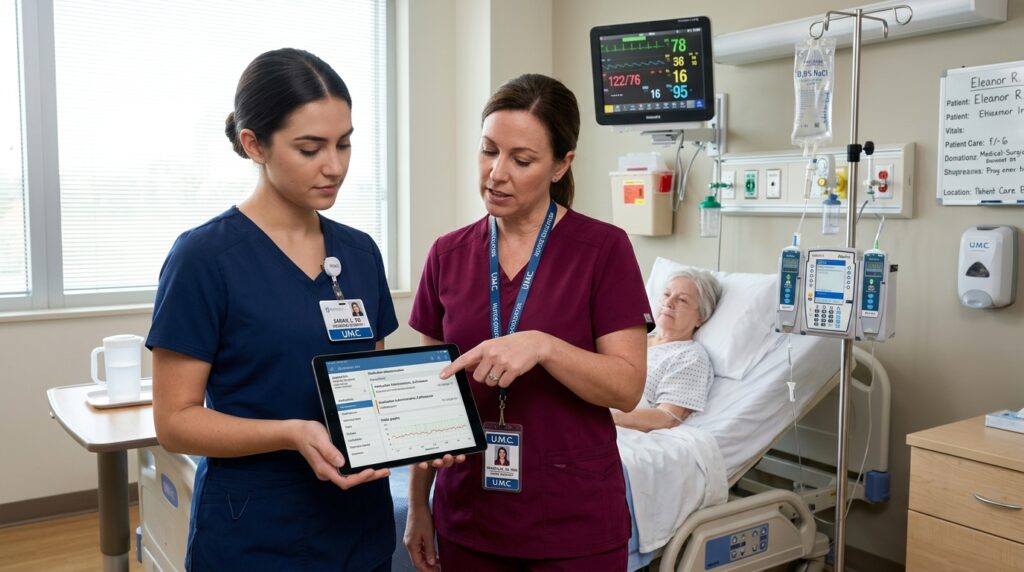
Why This Topic Matters for Nursing Students
Nursing education is unlike almost any other academic discipline. You are not simply learning content to pass an exam. You are learning to make decisions that affect whether a patient lives, recovers well, or suffers a preventable complication. Professors carry this responsibility heavily, and it shapes everything about how they teach, grade, and give feedback.
Many students assume that nursing school is primarily about absorbing information. In reality, nursing faculty are far more concerned with how you think, how you respond under pressure, and how safely you apply what you know. This distinction explains why some students with excellent test scores still struggle in clinical settings, while others who study differently become confident, safe practitioners.
Understanding what your professors actually value, rather than what you assume they value, can change how you approach every assignment, simulation, and clinical rotation from this point forward.
Clinical Judgment Matters More Than Memorization
Nursing professors consistently say the same thing about first year students. Too many of them try to memorize their way through nursing school the same way they memorized facts in high school biology or introductory chemistry courses.
Nursing does not work that way.
The National Council of State Boards of Nursing redesigned the NCLEX examination around the Clinical Judgment Measurement Model precisely because memorized facts do not predict safe practice. What predicts safe practice is the ability to recognize cues, analyze information, prioritize hypotheses, generate solutions, take action, and evaluate outcomes.
| Clinical Pearl
Instead of asking “What is the normal potassium level,” ask “What would happen to this specific patient if their potassium dropped below normal, and what would I need to do about it right now.” |
Also read on Evidence-Based Practice in Nursing: The Complete Student Guide (2026)
Why Memorization Alone Fails Students
Memorized facts are static. Patients are not. A textbook definition of hypokalemia does not tell you what to do when your assigned patient on the medical surgical floor suddenly develops muscle weakness, a weak pulse, and new onset cardiac dysrhythmia on the monitor. Clinical judgment is the bridge between static knowledge and dynamic patient care.
Professors want you to practice connecting the dots rather than simply recalling isolated facts. This means:
- Asking why a finding matters, not just what the finding is
- Predicting what could happen next for a specific patient
- Considering how age, comorbidities, and medications change the clinical picture
- Practicing prioritization using frameworks like Airway, Breathing, Circulation or Maslow’s hierarchy of needs
| Memorization Based Thinking |
Clinical Judgment Based Thinking |
| Recites the definition of sepsis |
Recognizes early signs of sepsis in a specific patient and initiates rapid response |
| Lists normal vital sign ranges |
Interprets a trend in vital signs over several hours to detect deterioration |
| States the mechanism of a medication |
Predicts how the medication interacts with the patient’s other conditions and medications |
| Answers isolated NCLEX style questions correctly |
Applies the same reasoning consistently across unfamiliar clinical scenarios |
Time Management Is a Clinical Skill, Not Just a Study Skill
Nursing professors frequently mention that students underestimate how much time management determines success, both academically and clinically. This is not simply about creating a study schedule. It is about learning to function under constant competing demands, a skill that mirrors real nursing practice almost exactly.
On a busy unit, a nurse might be managing medication administration, a family with questions, a call light, a physician order that needs clarification, and a deteriorating patient down the hall, all within the same fifteen minute window. Students who never practiced prioritizing coursework and studying under pressure often struggle when this same pressure appears at the bedside.
| Remember This
The way you manage your time as a student often predicts how you will manage your time as a nurse. Building these habits now protects your future patients. |
Practical Time Management Strategies Professors Recommend
- Study in short, focused sessions using active recall rather than long passive reading sessions
- Practice NCLEX style questions daily, even in small numbers, rather than cramming before exams
- Prepare clinical paperwork the night before, not the morning of clinical
- Use a consistent system for tracking due dates across all courses
- Build in recovery time after demanding clinical days rather than scheduling back to back obligations
Communication Skills Separate Good Nurses From Great Ones
Ask any experienced nursing professor what they wish students understood earlier, and communication almost always comes up. Clinical knowledge can be taught. Communication skills often take years to refine, and professors want students to start intentionally practicing them from day one.
This includes communication with patients, families, physicians, and other members of the healthcare team. Poor communication is consistently identified as a leading contributor to sentinel events and preventable errors in acute care settings, according to research published through the Joint Commission and reflected across nursing patient safety literature.
SBAR Is Not Just an Assignment
Many students treat the Situation, Background, Assessment, Recommendation framework as a classroom exercise rather than a professional habit. Professors want you to practice SBAR so often that it becomes automatic, because in a real clinical crisis, structured communication saves time and reduces error.
| Nursing Note
Practice SBAR out loud with a study partner before every clinical rotation. Fluency under pressure comes from repetition, not from reading about it once. |
Therapeutic Communication With Patients
Professors also emphasize that therapeutic communication is a skill, not a personality trait. Some students naturally connect with patients, but everyone can learn to:
- Use open ended questions to understand patient concerns
- Practice active listening without interrupting
- Sit at eye level with patients when possible
- Acknowledge emotions before jumping to solutions
- Avoid false reassurance, such as telling a frightened patient everything will be fine when the outcome is uncertain
The Nursing Process Deserves Deeper Respect
Assessment, Diagnosis, Planning, Implementation, and Evaluation may feel like an academic formality to many students, especially once care planning assignments start to feel repetitive. Professors consistently say this is one of the most underappreciated frameworks in nursing education.
The nursing process is not busywork. It is the underlying structure of every safe clinical decision a nurse makes, whether or not the nurse consciously labels each step.
Nursing Process Applied to a Realistic Scenario
Consider a 68 year old patient recovering from abdominal surgery who reports new onset shortness of breath.
| Nursing Process Step |
Application to This Patient |
| Assessment |
Auscultate lung sounds, check oxygen saturation, review vital sign trends, assess for calf tenderness or swelling |
| Diagnosis |
Consider risk for impaired gas exchange or risk for pulmonary embolism given recent surgery |
| Planning |
Set a goal for oxygen saturation above 94 percent and identify escalation criteria |
| Implementation |
Notify the provider, apply supplemental oxygen as ordered, reposition the patient, continue monitoring |
| Evaluation |
Reassess oxygen saturation, respiratory rate, and patient reported comfort after interventions |
| Critical Thinking
Notice how each step depends on the one before it. Skipping assessment leads to an inaccurate diagnosis. Skipping evaluation means you never know whether your intervention actually worked. |
Feedback Is a Gift, Not a Punishment
Professors often describe a noticeable difference between students who improve quickly and those who plateau. The difference usually is not natural ability. It is how each student responds to feedback.
Clinical instructors are trained to identify small errors before they become patterns, and even more importantly, before they become patient safety issues. When a professor corrects your technique, questions your rationale, or points out a documentation error, they are not trying to discourage you. They are trying to prevent a much larger mistake in your future practice.
| Common Student Mistake
Becoming defensive or emotionally shutting down after correction is one of the most common patterns professors observe, and one of the most damaging to long term growth. |
How to Receive Feedback Like a Professional
- Pause before responding, especially if your first instinct is to explain or defend
- Ask clarifying questions such as “What would you have done differently in that situation”
- Write feedback down so you can review it later, not just in the moment
- Look for patterns across multiple pieces of feedback rather than treating each one as isolated
Documentation Protects Patients and Protects You
Many students view documentation as tedious paperwork rather than a core clinical skill. Professors want students to understand early that documentation is both a communication tool and a legal record. If care is not documented, from a legal and professional standpoint, it is often treated as though it was not done at all.
Clear, timely, and accurate documentation:
- Communicates patient status to the next shift and other providers
- Demonstrates the clinical reasoning behind your actions
- Creates a legal record that can protect you if care is ever questioned
- Supports continuity of care across multiple departments and specialties
| Best Practice
Document as close to the time of care as possible. Memory fades quickly during a busy shift, and delayed documentation increases the risk of inaccuracy. |
Self Care Is Part of Professional Responsibility
Nursing professors frequently express concern about student burnout, and many wish students understood earlier that self care is not indulgent. It is a professional obligation, because an exhausted, dysregulated nurse cannot provide safe, attentive care.
Research on nurse burnout consistently links high stress, poor sleep, and emotional exhaustion to increased medical errors and decreased patient satisfaction. Building sustainable habits during nursing school protects both your wellbeing and your future patients.
Sustainable Habits Professors Recommend
- Protect sleep, even during demanding exam weeks
- Build a support system among classmates who understand the unique pressures of nursing school
- Practice stress reduction techniques before they are urgently needed, not only during a crisis
- Recognize early warning signs of burnout, including irritability, cynicism, and emotional numbness
- Seek support from counseling services or trusted mentors rather than trying to manage everything alone
| Patient Safety
A nurse who ignores their own wellbeing eventually places patients at risk. Taking care of yourself is part of taking care of others. |
Professionalism and Ethics Are Tested Every Day, Not Just on Exams
Ethics coursework often focuses on theoretical frameworks, but professors want students to understand that professional ethics shows up constantly in small, everyday decisions. Showing up on time, being honest about a mistake, respecting patient confidentiality in casual conversation, and maintaining professional boundaries are all ethical behaviors, even though they rarely appear as dramatic dilemmas.
| Evidence Update
Professional codes of ethics published by the American Nurses Association emphasize accountability, integrity, and advocacy as core expectations for every nurse, not only in crisis situations but in daily practice. |
Exam Preparation and NCLEX Readiness
Professors often notice that students study for exams differently than they should study for the NCLEX or for clinical competence. Passing a single exam and becoming a safe practicing nurse require overlapping but distinct skill sets.
Study Strategies That Actually Build Clinical Judgment
- Practice application and analysis level questions, not just recall level questions
- After answering a practice question, explain out loud why each incorrect answer is wrong, not only why the correct answer is right
- Group content by body systems and practice moving between them, since real patients rarely present with a single isolated problem
- Simulate timed conditions regularly so pacing becomes automatic
| Exam Tip
If two answer choices both seem reasonable, ask which one addresses the most immediate threat to airway, breathing, circulation, or safety. This single question resolves a large percentage of difficult NCLEX style items. |
Building Genuine Confidence as a Nursing Student
Confidence is one of the most misunderstood qualities in nursing education. Professors often clarify that confidence should never come from certainty, since nursing rarely offers certainty. Instead, confidence should come from having a reliable process you trust, even when the outcome is unclear.
| Quick Revision
Confident nurses are not nurses who never feel unsure. They are nurses who know exactly what to do when they feel unsure, including when and how to ask for help. |
This reframing matters because many students avoid asking questions out of fear it will make them look incompetent. In reality, professors consistently identify the willingness to ask for help at the right moment as one of the strongest predictors of a safe, trustworthy nurse.
How These Lessons Change Across the Lifespan
Clinical judgment, communication, and prioritization do not look the same for every patient. Professors want students to understand that age and developmental stage change almost every part of the nursing process, from how you assess a patient to how you educate their family. Students who only practice one mental model, usually built around a healthy adult, are often caught off guard the first time they care for a newborn, a toddler, or a frail older adult.
Pediatric Considerations
Children are not simply small adults. Vital sign ranges shift with age, pain often presents through behavior rather than clear verbal reports, and family involvement becomes part of the care plan rather than an optional courtesy. A toddler who is quietly withdrawn may be signaling significant pain, while an infant with subtle feeding changes may be showing an early sign of cardiac or respiratory compromise.
Adult Considerations
Working age adults frequently balance acute illness with jobs, caregiving responsibilities, and financial pressure. Professors encourage students to assess not only the clinical picture but also the practical barriers, such as whether a patient can realistically afford a prescribed medication or take time off work to attend follow up appointments.
Geriatric Considerations
Older adults often present atypically. A urinary tract infection may appear as sudden confusion rather than burning with urination. Polypharmacy increases the risk of drug interactions, and normal aging changes in kidney and liver function alter how medications are metabolized. Professors repeatedly emphasize that failing to account for these differences is one of the most common sources of missed diagnoses among new graduates.
| Nursing Note
When something does not fit the textbook presentation, consider the patient’s age and baseline function before assuming the finding is insignificant. |
Common Myths About Nursing School Professors Wish Would Disappear
Certain myths circulate every year among incoming students, and professors say these misconceptions often create unnecessary fear or false confidence. Recognizing them early can help you approach your program with a more accurate, and often more encouraging, perspective.
| Common Myth |
What Professors Actually Observe |
| You need a photographic memory to succeed in nursing school |
Strong critical thinking and consistent study habits matter far more than raw memorization ability |
| Asking for help in clinical makes you look incompetent |
Instructors consistently rate help seeking behavior as a sign of safety and maturity, not weakness |
| One bad exam grade means you are not cut out for nursing |
Most successful nurses can point to at least one difficult exam or course they had to work hard to overcome |
| Clinical instructors are trying to catch you making mistakes |
Instructors are primarily focused on catching small errors early, before they become patterns that could harm a patient |
| You should already feel confident by graduation |
Healthy uncertainty paired with strong clinical reasoning is a normal and expected part of early practice |
A Day in the Life: Putting These Lessons Into Practice
Consider a nursing student named Maria during her final semester medical surgical rotation. At the start of her shift, she reviews her assigned patients and notices that one, an 82 year old man recovering from a hip fracture repair, has a slightly elevated heart rate compared to the previous shift’s documentation.
Instead of dismissing the finding as insignificant, Maria applies the lessons this article has described. She uses clinical judgment rather than memorized ranges alone, considering his age, recent surgery, and mobility status. She manages her time by addressing this concern early in her shift rather than waiting until after routine tasks. She communicates using SBAR when she contacts the charge nurse, and she documents her assessment and actions clearly and promptly.
It turns out the patient is showing early signs of dehydration following surgery, a finding that is easily corrected once identified, but could have progressed into a more serious complication if ignored. Maria’s instructor later uses this scenario as a teaching example, not because Maria did something extraordinary, but because she consistently applied ordinary, foundational habits under real pressure.
| Best Practice
Excellent nursing care rarely comes from dramatic heroics. It comes from consistently applying foundational habits, even when nothing seems urgent. |
Memory Aids and Study Tools Professors Recommend
While clinical judgment cannot be built through memorization alone, certain foundational facts still need to be recalled quickly and accurately. Professors often recommend structured memory aids to free up mental energy for higher level reasoning during exams and clinical practice.
- Use mnemonics sparingly, and only for information that genuinely benefits from quick recall, such as assessment order or medication classes
- Create your own summary sheets rather than relying entirely on premade materials, since the act of creating them reinforces learning
- Group related conditions together and compare their similarities and differences side by side
- Review previously missed practice questions weekly, not just before the next exam
- Teach a concept out loud to a classmate or even to an empty room, since explaining a topic exposes gaps in understanding quickly
| Quick Revision
If you cannot explain a concept simply to someone outside of nursing, you likely need to review it further before the exam. |
Lifelong Learning Does Not End at Graduation
Perhaps the most common thing nursing professors wish students understood is that nursing school is the beginning of your education, not the end of it. Medical knowledge evolves constantly, guidelines change, and evidence based practice requires nurses to keep learning long after they pass the NCLEX.
Professors hope students leave their programs not simply with a diploma, but with genuine curiosity and a habit of continuing education that will carry them through decades of practice.
Conclusion
Nursing professors see the same struggles repeat across every cohort of students, not because students lack potential, but because certain lessons are rarely spoken aloud until a mistake makes them unavoidable. Clinical judgment, time management, communication, documentation, self care, and lifelong curiosity are not separate topics. They are threads woven through every single day of safe, competent nursing practice.
If you take one lesson from this article, let it be this. Nursing school is not primarily about proving what you already know. It is about building the thinking patterns, habits, and professional instincts that will protect your patients for the rest of your career. Approach every assignment, every clinical shift, and every piece of feedback with that goal in mind, and you will not only pass your program. You will become the kind of nurse your professors hoped you would be.
FAQ
What do nursing professors wish students knew before starting clinical rotations?
Most professors wish students understood that clinical rotations prioritize safe thinking and communication over speed or perfection. Asking questions and admitting uncertainty are viewed far more favorably than pretending to know something you do not.
Why is clinical judgment more important than memorization in nursing school?
Clinical judgment allows nurses to apply knowledge to unpredictable, real world patient situations. Memorized facts alone cannot account for the unique combination of symptoms, history, and context each patient presents.
How can nursing students improve their clinical judgment skills?
Students can improve clinical judgment by practicing application based questions, explaining their reasoning out loud, and consistently asking what a finding means for a specific patient rather than only recalling definitions.
Why do nursing professors emphasize communication so heavily?
Communication failures are among the leading causes of preventable errors in healthcare. Professors emphasize communication because strong communicators reduce risk and improve patient outcomes throughout their careers.
What is the SBAR communication method used for?
SBAR stands for Situation, Background, Assessment, and Recommendation. It is a structured communication framework nurses use to relay critical patient information clearly and efficiently, especially during handoffs or urgent situations.
How important is time management in nursing school?
Time management is essential both academically and clinically. Nursing students who develop strong time management skills during school are better prepared to manage competing patient priorities safely once they begin practicing.
Why do professors care so much about documentation?
Documentation serves as a legal record and a communication tool between healthcare providers. Incomplete or inaccurate documentation can compromise patient safety and create legal risk for the nurse.
How should nursing students respond to negative feedback from instructors?
Students should approach feedback with curiosity rather than defensiveness, ask clarifying questions, and look for patterns across multiple pieces of feedback to identify areas for meaningful growth.
Is self care really that important during nursing school?
Yes. Chronic stress and burnout are linked to increased clinical errors and decreased patient satisfaction. Practicing sustainable self care habits during school helps protect both the student and their future patients.
What is the best way to study for the NCLEX during nursing school?
Effective NCLEX preparation includes practicing application and analysis level questions, reviewing the rationale behind every answer choice, and simulating timed testing conditions regularly rather than relying only on memorization.
How can students build genuine confidence in clinical settings?
Confidence comes from having a reliable clinical reasoning process, not from having all the answers. Learning when and how to ask for help is one of the strongest indicators of a safe, competent nurse.
Why is the nursing process still relevant beyond nursing school assignments?
The nursing process provides the underlying structure for safe clinical decision making. Even experienced nurses rely on its logic, whether or not they consciously label each step during practice.
What ethical expectations do nursing professors emphasize most?
Professors emphasize honesty, accountability, patient confidentiality, and professional boundaries as daily ethical responsibilities, not only as concepts reserved for complex ethical dilemmas.
Do nursing professors expect students to know everything by graduation?
No. Professors expect graduates to have a strong foundation and a habit of continued learning, since nursing knowledge and best practices continue evolving throughout a nurse’s entire career.
What is one habit nursing professors wish more students developed early?
Many professors wish students developed the habit of explaining their clinical reasoning out loud early in their education, since this practice strengthens critical thinking far more effectively than passive review.
References
American Nurses Association. (2015). Code of ethics for nurses with interpretive statements. American Nurses Association.
Joint Commission. (2024). Sentinel event data: Root causes by event type. The Joint Commission.
National Council of State Boards of Nursing. (2023). Clinical judgment measurement model. NCSBN.
National Institutes of Health. (2022). Nurse burnout and patient safety outcomes. National Library of Medicine, PubMed Central.
World Health Organization. (2021). State of the world’s nursing report. World Health Organization.








 Evan John