If you’re a nursing student, you’ve likely heard the phrase “follow ANA guidelines” from your instructors. But what does that actually mean for your assignment? How do you translate a professional code into a powerful academic paper? The American Nurses Association (ANA) provides the foundational framework for nursing practice in the United States. Its documents, especially the Code of Ethics for Nurses and the Nursing: Scope and Standards of Practice, are more than just rules, they are the philosophical and practical bedrock of the profession. Leveraging these guidelines in your assignments doesn’t just help you get a good grade, it trains you to think and reason like a professional nurse.
Why ANA Guidelines are Non-Negotiable in Nursing Assignments
The ANA is the premier professional organization for registered nurses in the United States. Its mission is to advance the nursing profession and promote the health and well-being of all people. The ANA’s Code of Ethics for Nurses with Interpretive Statements and the Nursing: Scope and Standards of Practice are foundational documents that define the ethical obligations and professional responsibilities of nurses.
Using these guidelines in your assignments demonstrates a deep understanding of the nursing profession’s core values. It shows that you’re not just regurgitating facts but are capable of applying professional standards to real-world scenarios. This approach is what distinguishes a good nursing student from a great one. It also prepares you for the realities of clinical practice, where ethical decision-making and adherence to professional standards are daily occurrences.
Writing nursing assignments using ANA guidelines can be a challenge, but it’s essential for producing high-quality, professional work. The American Nurses Association (ANA) provides a framework for professional nursing practice, and understanding its standards is crucial for any nursing student or professional.
Before we dive into the “how,” let’s clarify the “why.” Using ANA guidelines elevates your work in three key ways:
-
Demonstrates Professional Competence: It shows your professor you understand the core tenets of the profession beyond textbook knowledge.
-
Provides a Authoritative Framework: It gives you a trusted structure to analyze case studies, argue a point, or develop a care plan. Instead of just your opinion, you’re citing the profession’s stance.
-
Ensures Ethical Rigor: It anchors your clinical decisions and recommendations in a recognized ethical code, which is crucial for tackling complex patient scenarios.
Read also Mental Health Nursing: Best Assignment Topics for 2025
Key ANA Documents You Need to Know
Familiarize yourself with these essential publications:
-
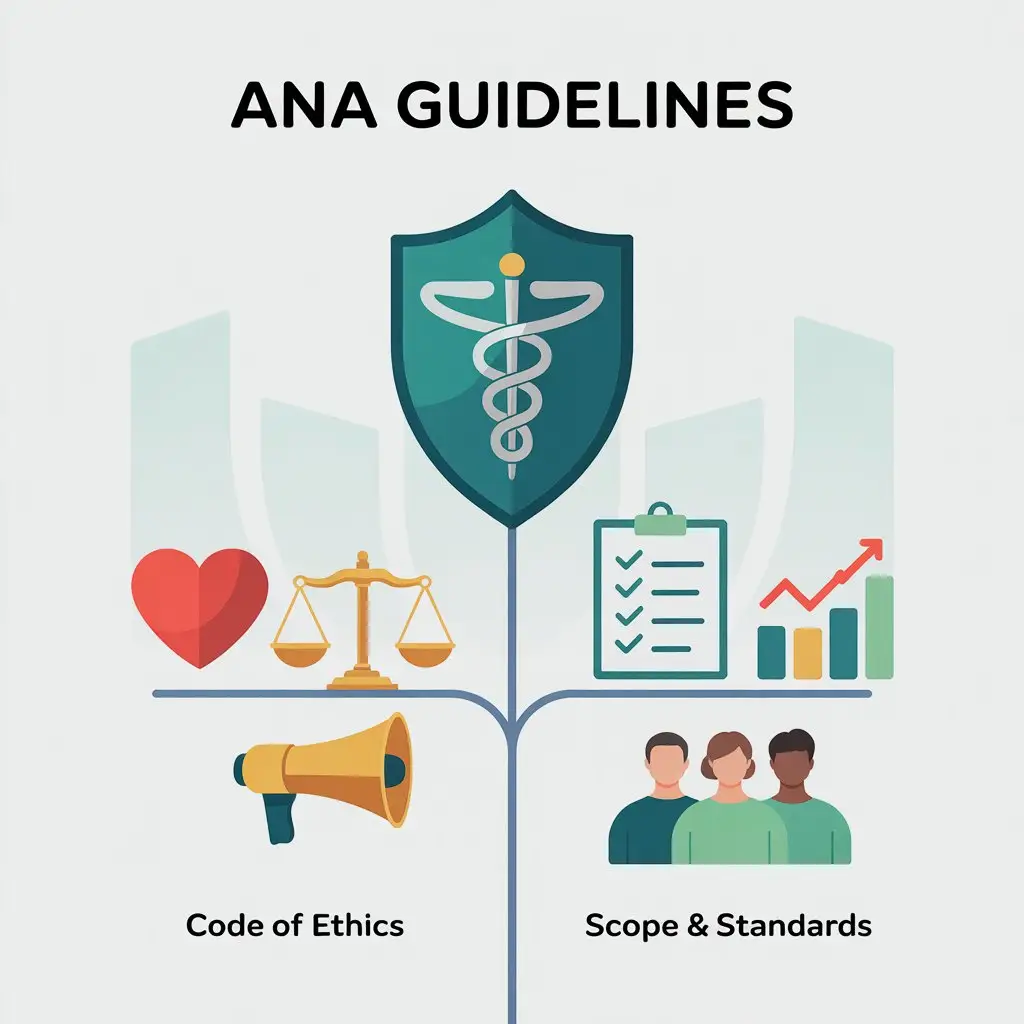
Code of Ethics for Nurses with Interpretive Statements (The Code): This is the ethical compass of nursing. Its nine provisions cover everything from patient compassion and advocacy to the nurse’s duty to self and the profession.
-
Nursing: Scope and Standards of Practice (The Standards): This outlines the “who, what, where, when, why, and how” of nursing practice. It defines the key standards of practice (e.g., assessment, diagnosis, outcomes identification, planning, implementation, evaluation) and professional performance (e.g., ethics, education, evidence-based practice, collaboration).
Why ANA Guidelines Matter for Nursing Assignments
The ANA is the premier professional organization for registered nurses in the United States. Its mission is to advance the nursing profession and promote the health and well-being of all people. The ANA’s Code of Ethics for Nurses with Interpretive Statements and the Nursing: Scope and Standards of Practice are foundational documents that define the ethical obligations and professional responsibilities of nurses.
Using these guidelines in your assignments demonstrates a deep understanding of the nursing profession’s core values. It shows that you’re not just regurgitating facts but are capable of applying professional standards to real-world scenarios. This approach is what distinguishes a good nursing student from a great one. It also prepares you for the realities of clinical practice, where ethical decision-making and adherence to professional standards are daily occurrences.
Key ANA Principles to Integrate into Your Assignments
To effectively incorporate ANA guidelines, focus on these core principles:
1. The Nursing Process
The Nursing Process is a systematic, five-step framework used by nurses to provide patient care. It’s a cornerstone of the nursing profession and should be a central part of many of your assignments. The five steps are:
- Assessment: This is where you gather information about the patient’s health status. In an assignment, this means collecting relevant data from case studies, patient charts, or research. You need to identify the patient’s physical, psychological, and social needs.
- Diagnosis: Based on the assessment, you identify the patient’s actual or potential health problems. These are not medical diagnoses but nursing diagnoses, which describe a human response to a health condition. For example, instead of “pneumonia,” a nursing diagnosis might be “Impaired Gas Exchange.”
- Planning: This involves setting realistic, patient-centered goals and outcomes. What do you want to achieve for the patient? Your plan should include specific, measurable, achievable, relevant, and time-bound (SMART) goals.
- Implementation: Here, you put your plan into action. This section of your paper should detail the specific nursing interventions you would perform to help the patient achieve their goals.
- Evaluation: The final step is to determine if your interventions were successful. Did the patient’s condition improve? This step involves reflecting on the process and making adjustments as needed.
By structuring your assignment around the nursing process, you create a logical and professional flow that mirrors real-world nursing practice.
2. Adherence to the Code of Ethics
The ANA Code of Ethics is a non-negotiable part of nursing. It outlines the ethical principles that guide nursing practice. When writing your assignments, you should demonstrate an awareness of these principles, especially when discussing patient care scenarios. Key ethical principles include:
- Autonomy: Respecting the patient’s right to make their own decisions about their healthcare.
- Beneficence: Acting in the patient’s best interest.
- Non-maleficence: Do no harm.
- Justice: Ensuring fair and equal treatment for all patients.
- Fidelity: Maintaining trust and keeping promises to the patient.
In your papers, you can explore ethical dilemmas and apply these principles to justify your proposed course of action. For example, if a patient refuses a treatment, you should discuss the principle of autonomy and how you would ethically navigate the situation.
3. Scope and Standards of Practice
The ANA’s Scope and Standards of Practice define the who, what, where, when, why, and how of nursing practice. It sets the professional standards and competent care delivery. When writing, you can refer to these standards to justify your proposed interventions or to explain the roles and responsibilities of a nurse.
For example, when discussing patient education, you can reference Standard 5, Implementation, which states that nurses implement the plan of care to achieve the patient’s goals. This demonstrates that your recommendations are based on established professional standards.
What Are ANA Guidelines?
The ANA Guidelines are a set of principles developed by the American Nurses Association to support nurses in delivering safe, ethical, and effective care. These guidelines cover areas such as:
- Nursing documentation
- Ethical standards
- Scope and standards of practice
- Staffing principles
- Professional conduct
For academic writing, the most relevant ANA resources include the Principles for Nursing Documentation and ANA’s Scope and Standards of Practice.
Step 1: Understand the Assignment Requirements
Before diving into writing, carefully review the assignment brief. Ask yourself:
- What is the topic?
- What type of paper is required (case study, research, reflection)?
- Are there specific formatting requirements (APA style, word count)?
- What learning outcomes are being assessed?
Understanding these elements ensures your assignment meets academic expectations and aligns with ANA’s emphasis on clarity and purpose in documentation.
Step 2: Choose a Relevant Nursing Topic
Selecting an appropriate topic is the foundation of a strong nursing assignment. The topic should align with ANA principles, such as patient advocacy, ethical practice, or evidence-based care. For example, you could explore topics like:
-
The role of nurses in promoting patient safety.
-
Ethical dilemmas in end-of-life care.
-
Implementing evidence-based interventions for chronic disease management.
Ensure the topic is specific, manageable, and relevant to your course objectives. For instance, a topic like “Applying ANA’s Code of Ethics to Pediatric Nursing” allows you to focus on a specific area while integrating ANA guidelines.
Step 3: Conduct Thorough Research
ANA guidelines emphasize evidence-based practice, so your assignment must be supported by credible sources. Use peer-reviewed journals, textbooks, and reputable databases like PubMed, CINAHL, or the ANA’s own resources. When researching:
-
Focus on ANA Standards: Reference the ANA’s Nursing: Scope and Standards of Practice to understand the competencies expected of nurses. For example, Standard 7 emphasizes ethics, which can guide discussions on moral dilemmas in nursing.
-
Incorporate Current Evidence: ANA guidelines stress the importance of up-to-date research. Ensure your sources are recent (within the last 5–7 years) unless citing seminal works.
-
Use ANA Resources: The ANA website offers access to position statements, policy briefs, and practice guidelines that can strengthen your assignment.
Organize your research by noting key points, such as ANA’s emphasis on patient-centered care or interdisciplinary collaboration, and how they apply to your topic.
Step 4: Structure Your Assignment
A well-structured assignment is critical for clarity and professionalism. Follow a standard academic format, such as:
-
Introduction: Introduce your topic, its relevance to nursing, and how ANA guidelines apply. For example, if writing about patient advocacy, mention how ANA’s Code of Ethics prioritizes patient rights.
-
Body: Divide the body into sections that address specific aspects of the topic. Use subheadings to enhance readability. For instance:
-
ANA Guidelines Overview: Summarize relevant ANA standards or ethical principles.
-
Application to Nursing Practice: Discuss how these guidelines apply to your topic, supported by evidence.
-
Case Study or Example: Include a real-world or hypothetical scenario to illustrate the application of ANA guidelines.
-
Conclusion: Summarize key points and emphasize the importance of adhering to ANA standards in nursing practice.
Ensure each section aligns with ANA principles, such as ethical practice, patient advocacy, or evidence-based care.
Step 5: Integrate ANA’s Code of Ethics
The ANA’s Code of Ethics for Nurses is a cornerstone of professional nursing practice. It outlines nine provisions that guide ethical decision-making. When writing your assignment, reference specific provisions to strengthen your arguments. For example:
-
Provision 1: “The nurse practices with compassion and respect for the inherent dignity, worth, and unique attributes of every person.” Use this to discuss patient-centered care in assignments about cultural competence or diversity.
-
Provision 3: “The nurse promotes, advocates for, and protects the rights, health, and safety of the patient.” This can support discussions on patient safety or advocacy in clinical settings.
-
Provision 5: “The nurse owes the same duties to self as to others.” This is relevant for assignments on nurse burnout or self-care.
Cite the Code of Ethics directly and explain how it informs your analysis or recommendations. This demonstrates a deep understanding of professional standards.
Step 6: Emphasize Evidence-Based Practice
ANA guidelines prioritize evidence-based practice (EBP), which involves integrating clinical expertise, patient values, and the best available research. When writing your assignment:
-
Define EBP: Explain how EBP aligns with ANA standards, particularly Standard 8 (Education) and Standard 13 (Evidence-Based Practice and Research).
-
Include Research Findings: Support your arguments with data from credible studies. For example, if discussing wound care, cite studies on evidence-based interventions like pressure ulcer prevention.
-
Discuss Implementation: Explain how nurses can apply EBP in real-world settings, referencing ANA’s emphasis on continuous quality improvement.
Using EBP not only strengthens your assignment but also shows alignment with ANA’s commitment to advancing nursing knowledge.
Step 7: Address Ethical Considerations
Nursing assignments often involve ethical dilemmas, and ANA guidelines provide a framework for addressing them. For example:
-
Identify Ethical Issues: If writing about informed consent, discuss potential conflicts between patient autonomy and clinical decision-making.
-
Apply ANA’s Code of Ethics: Use relevant provisions to analyze the dilemma. For instance, Provision 2 emphasizes the nurse’s primary commitment to the patient, which can guide discussions on informed consent.
-
Propose Solutions: Offer practical, ethical solutions based on ANA guidelines, such as involving an ethics committee or prioritizing patient education.
This approach demonstrates critical thinking and adherence to professional standards.
Step 8: Use Proper Citation and Formatting
ANA guidelines emphasize professionalism, which extends to academic writing. Follow the citation style required by your institution (e.g., APA, MLA). For example, in APA format, cite the ANA’s Code of Ethics as:
American Nurses Association. (2015). Code of ethics for nurses with interpretive statements. Silver Spring, MD: Author.
Ensure your assignment is free of plagiarism by properly citing all sources. Use clear, concise language and avoid jargon unless it’s relevant to the topic. Proofread for grammar, spelling, and formatting errors to maintain a professional tone.
Step 9: Reflect on Professional Implications
ANA guidelines encourage nurses to reflect on their practice. In your assignment, include a brief reflection on how the topic relates to your development as a nurse. For example:
This reflection shows self-awareness and a commitment to professional growth, aligning with ANA’s emphasis on lifelong learning.
Why ANA Guidelines Matter in Academic Writing
Adhering to ANA guidelines in academic writing is crucial for nursing students. It not only enhances the quality of their work but also prepares them for professional practice.
Professional Credibility and Standardization
Following ANA guidelines lends credibility to nursing assignments and ensures that they meet professional standards. This standardization is key to maintaining the integrity of nursing education.
Connection to Nursing Practice
By adhering to ANA guidelines, nursing students can better connect theoretical knowledge to practical nursing skills. This connection is vital for effective patient care.
Essential Components of Nursing Assignments
Understanding the fundamental elements of nursing assignments is vital for students to produce high-quality academic work. Nursing assignments are structured around several key components, each serving a specific purpose in the overall presentation of the assignment.
Title Page and Abstract Requirements
The title page and abstract are crucial initial elements of a nursing assignment. The title page must include the student’s name, institutional affiliation, and assignment title, all formatted according to ANA standards.
Proper Formatting According to ANA Standards
Adhering to ANA formatting guidelines is essential for the title page and abstract. This includes using a clear, legible font and ensuring that all necessary information is accurately presented.
Body Structure and Organization
The body of a nursing assignment is where the main arguments and discussions are presented. It typically includes an introduction, problem statement, and literature review.
Introduction and Problem Statement
The introduction sets the stage for the entire assignment, providing context and outlining the purpose of the work. The problem statement clearly articulates the issue being addressed.
Literature Review Section
A comprehensive literature review is critical, synthesizing existing research to support the assignment’s arguments and findings.
Reference Page Formatting
The reference page is a critical component, listing all sources cited in the assignment. Proper formatting according to ANA-approved citation styles is mandatory.
ANA-Approved Citation Styles
Using the correct citation style, as approved by the ANA, ensures consistency and credibility. Common citation styles include APA, which is frequently used in nursing and healthcare disciplines.
| Citation Style |
Key Features |
Usage in Nursing |
| APA |
Author-date format, emphasis on publication date |
Widely used in nursing and healthcare |
| Other Styles |
Varying formats for in-text citations and references |
Less common, but may be specified by instructor |
Conducting Effective Research for Nursing Papers
Effective research is the backbone of any well-structured nursing assignment, enabling students to provide evidence-based arguments. To produce high-quality nursing papers, students must be able to identify credible sources, effectively utilize nursing databases, and evaluate the quality of evidence.
Identifying Credible Nursing Resources
When conducting research for nursing papers, it’s crucial to identify credible sources of information. Nursing students should focus on academic sources, particularly peer-reviewed journals, which offer the most reliable information.
Peer-Reviewed Journals vs. General Sources
Peer-reviewed journals are considered the gold standard in nursing research because they are reviewed by experts in the field before publication. In contrast, general sources, such as websites and non-academic journals, may not provide reliable information. For instance, a study published in a peer-reviewed journal like the Journal of Nursing Education is more credible than an article on a general healthcare website.
Utilizing Nursing Databases Effectively
Nursing students should be familiar with nursing-specific databases such as CINAHL (Cumulative Index to Nursing and Allied Health Literature) and PubMed. These databases provide access to a vast array of nursing research articles and studies.
CINAHL, PubMed, and Nursing-Specific Databases
CINAHL and PubMed are two of the most widely used databases in nursing research. CINAHL is particularly useful for nursing and allied health professionals, while PubMed offers a broader range of biomedical literature. Students should learn how to effectively search these databases to find relevant information for their research papers.
| Database |
Description |
Usefulness for Nursing Students |
| CINAHL |
Cumulative Index to Nursing and Allied Health Literature |
Highly relevant for nursing and allied health research |
| PubMed |
Biomedical literature database |
Useful for a broad range of biomedical research, including nursing |
Evaluating Evidence Quality
Evaluating the quality of evidence is a critical step in nursing research. Students should understand the hierarchy of evidence in nursing research, which ranks study designs according to their validity and relevance.
Hierarchy of Evidence in Nursing Research
The hierarchy of evidence in nursing research typically ranks systematic reviews and meta-analyses as the highest level of evidence, followed by randomized controlled trials, and then observational studies. Understanding this hierarchy helps students to critically evaluate the evidence they find during their research.
“The quality of evidence is a critical factor in determining the validity of research findings. Nursing students should be able to evaluate the evidence they find and use it to support their arguments.”
Incorporating Evidence-Based Practice in Your Writing
The integration of evidence-based practice in nursing writing enhances the validity and reliability of academic assignments. By incorporating current research and evidence into their work, nursing students can produce high-quality assignments that reflect the latest developments in the field.
Connecting Theory to Clinical Practice
One of the key aspects of evidence-based practice is connecting theoretical knowledge to clinical practice. This involves translating research findings into practical applications that can be used in real-world healthcare settings.
Translating Research into Practical Applications
To effectively translate research into practice, nursing students must be able to analyze research findings, identify relevant evidence, and apply it to clinical scenarios. This process requires critical thinking and problem-solving skills.
Presenting Research Findings Appropriately
Presenting research findings in a clear and concise manner is crucial for effective communication in nursing practice. This can be achieved through the use of data presentation methods such as tables, graphs, and charts.
Data Presentation Methods
| Method |
Description |
Use Case |
| Tables |
Used to present detailed numerical data |
Comparing patient outcomes across different treatment groups |
| Graphs |
Used to illustrate trends and patterns |
Showing the progression of a disease over time |
| Charts |
Used to display categorical data |
Illustrating the distribution of different diagnoses within a patient population |
Analyzing and Synthesizing Evidence
Analyzing and synthesizing evidence is a critical component of evidence-based practice. It requires critical thinking and analytical skills to evaluate the quality and relevance of evidence.
Critical Thinking in Nursing Literature
Critical thinking is essential for evaluating the credibility of sources, identifying biases, and synthesizing evidence to inform nursing practice. By developing these skills, nursing students can produce well-informed assignments that reflect the current state of knowledge in the field.
Conclusion
Writing nursing assignments using ANA guidelines is more than just meeting academic requirements, it’s about preparing yourself for a professional career in nursing. By integrating ethics, evidence-based practice, professionalism, and patient-centered approaches into your work, you show that you are capable of applying theory to practice.
The key steps are simple: understand the ANA Code of Ethics, rely on evidence-based practice, follow the nursing process, and maintain professionalism throughout your writing.
If you practice these principles consistently, not only will your assignments improve, but you’ll also develop the skills and mindset required to be a competent, ethical, and respected nurse.
FAQ
What are the American Nurses Association (ANA) guidelines, and why are they important in nursing assignments?
The ANA guidelines are standards developed by the American Nurses Association to ensure professional credibility and standardization in nursing practice and academic writing. They are crucial in nursing assignments as they enhance the quality and validity of the work.
How do I properly format my nursing assignment according to ANA standards?
To format your nursing assignment according to ANA standards, you should adhere to specific guidelines for the title page, abstract, body structure, and reference page. This includes using ANA-approved citation styles and ensuring that your work is well-organized and clearly written.
What are the best sources to use for research in nursing assignments?
The best sources for research in nursing assignments are peer-reviewed journals and nursing-specific databases such as CINAHL and PubMed. These sources provide credible and reliable information that is essential for evidence-based practice.
How do I evaluate the quality of evidence in nursing research?
Evaluating the quality of evidence in nursing research involves understanding the hierarchy of evidence, with systematic reviews and meta-analyses being at the top. You should also consider the study design, sample size, and relevance to your research question.
What is the importance of maintaining a professional tone and language in nursing assignments?
Maintaining a professional tone and language in nursing assignments is crucial as it reflects your professionalism and credibility as a nursing student. It also ensures that your work is taken seriously and that you are able to communicate complex ideas effectively.
How can I avoid plagiarism in my nursing assignments?
To avoid plagiarism in your nursing assignments, you should properly cite all sources using ANA-approved citation styles, paraphrase information instead of using direct quotes, and use plagiarism checking software to detect any unintentional plagiarism.
What are some common mistakes to avoid in nursing assignments?
Common mistakes to avoid in nursing assignments include grammar and punctuation errors, inconsistent formatting, and vague or unsupported claims. You should also ensure that your work is well-organized and that you have properly cited all sources.
How can I improve my nursing assignments through revision and proofreading?
To improve your nursing assignments through revision and proofreading, you should use self-editing techniques, participate in peer review, and utilize technology tools such as grammar and plagiarism checking software. This will help you refine your work and ensure that it meets ANA guidelines.
What is the role of evidence-based practice in nursing writing?
Evidence-based practice plays a crucial role in nursing writing as it ensures that your work is grounded in the best available evidence. This enhances the validity and credibility of your arguments and recommendations.
How do I ensure that my nursing assignment is culturally sensitive?
To ensure that your nursing assignment is culturally sensitive, you should use inclusive language, avoid making assumptions about specific cultural groups, and be aware of the cultural nuances that may impact your research or practice.









 Evan John