A dissertation isn’t a paper. It’s a year-long, sometimes multi-year, project with no syllabus, no weekly deadlines handed to you, and no one checking in unless you schedule it yourself. Knowing how to plan a dissertation is often the difference between finishing on schedule and watching your timeline slip semester after semester.
Most graduate students don’t struggle with the writing itself as much as they struggle with the absence of structure. There’s no built-in pacing, no one breaking the project into weekly tasks, and no clear signal for when you’ve done “enough” research before you start writing. This guide walks through a practical, step-by-step system for planning a dissertation from your first proposal draft to your final defense.
🎓 Why Most Dissertations Stall Before They Really Start
You’re Managing a Year-Long Project With No Built-In Structure
Coursework comes with a syllabus. A dissertation doesn’t. You’re responsible for setting your own milestones, tracking your own progress, and noticing when you’ve drifted off course, often months before your advisor does.
The Scope Feels Too Big to Plan Around
“Write a dissertation” isn’t a task you can put on a to-do list. It only becomes manageable once it’s broken into phases small enough to actually schedule: narrowing your research question, completing your literature review, collecting data, and drafting chapter by chapter.
💡 QUICK TIP
Before you plan a single writing session, plan the phases first. A dissertation timeline built around milestones, not just a final deadline, is far easier to stick to.
🗓️ Step 1 — Build Your Dissertation Timeline First
Work Backward From Your Defense Date
Start with the date you want to defend, then work backward. Give yourself a buffer for committee feedback, formatting revisions, and the inevitable delays that come with any long research project. Most students underestimate the time needed for revisions far more than the time needed for writing.
Break the Timeline Into Phases, Not Just Deadlines
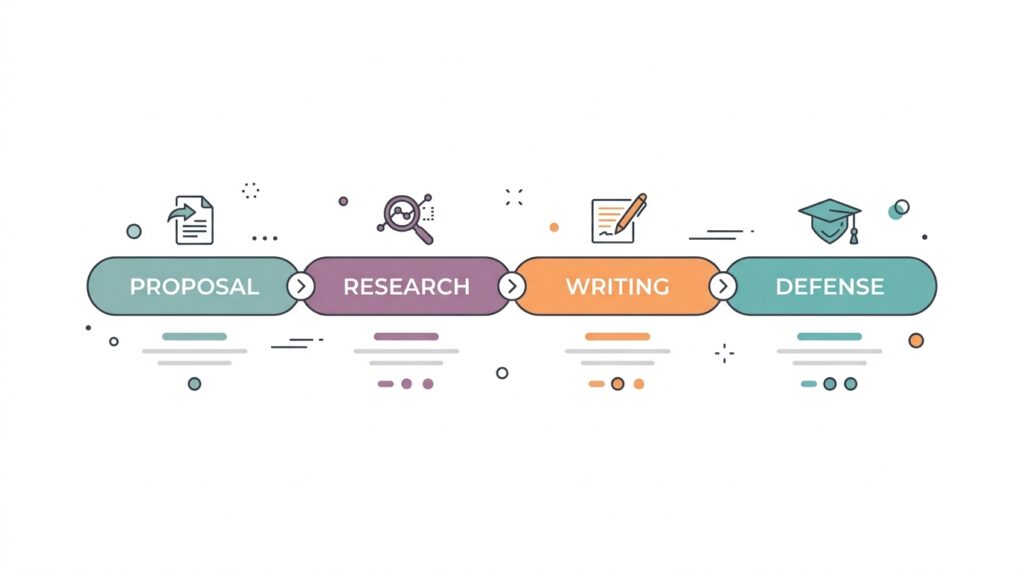
A realistic dissertation timeline usually includes five phases: proposal approval, literature review, data collection, drafting, and revision. Assign a rough date range to each phase rather than a single hard deadline. This gives you room to adjust without feeling like the whole plan has collapsed.

🎯 Step 2 — Narrow and Lock In Your Research Question
Your research question is the anchor for every decision that follows, from which sources you read to which methodology you choose. A vague or overly broad question is one of the biggest reasons dissertations stretch beyond their planned timeline.
Common Mistakes That Delay This Step
Trying to research everything related to the topic. A dissertation answers one specific question well, not an entire field broadly.
Skipping committee input on the question itself. A question your committee hasn’t approved in principle can lead to a proposal that gets sent back for major revisions.
Waiting for the “perfect” question before starting research. Research questions are almost always refined during the literature review, not before it.
Need structured help narrowing your topic or drafting a proposal? suggested page/topic: dissertation proposal writing help can walk you through it.
📚 Step 3 — Plan the Literature Review as an Ongoing System
Treat your literature review as a system you maintain, not a task you finish once. Set up a simple tracker for every source: citation details, key findings, and how it relates to your research question. Doing this from day one prevents the common late-stage scramble to relocate sources you read months earlier.
Schedule literature review time in recurring blocks rather than one long push. A steady weekly rhythm, even two or three sessions a week, builds a stronger foundation than an intense read-everything week followed by months of neglect.
Reliable literature review support and organized reference management tools (see Harvard Library’s citation guides can make this phase considerably less overwhelming.
✍️ Step 4 — Structure Your Writing Schedule Chapter by Chapter
Once you’re drafting, plan by chapter rather than by page count. Each chapter has its own rhythm: the literature review chapter draws on research you’ve already gathered, while the methodology chapter often requires more careful, slower writing.
| Monday–Tuesday |
Draft new material for the current chapter, two 90-minute sessions. |
| Wednesday |
Literature review maintenance and source organization. |
| Thursday |
Revise the previous week’s draft based on advisor or peer feedback. |
| Friday |
Review progress against the phase timeline; adjust the following week’s plan. |
For formatting and structural consistency across chapters, dissertation editing support can save significant time in the final stretch.
💡 QUICK TIP
Write your methodology chapter as soon as your proposal is approved, while the details are still fresh. Writing it months later almost always takes longer.
🤝 Step 5 — Build In Advisor Check-Ins and Feedback Loops
A dissertation timeline without scheduled advisor check-ins tends to drift. Set recurring meetings, even brief ones, rather than waiting until a full chapter is ready to share. Regular, smaller feedback loops catch structural issues early, before they require a full rewrite.
✅ What Makes a Dissertation Planning System Actually Work
- It’s phase-based, not date-based. Milestones give you flexibility that a single deadline doesn’t.
- It tracks sources as you go. Reconstructing a literature review after the fact wastes weeks.
- It includes recurring feedback points. Waiting for “finished” chapters before sharing them slows revisions down.
- It accounts for rest. A dissertation is a marathon; a system with no recovery built in leads to burnout well before the defense.
Research on graduate student wellbeing consistently shows that sustainable pacing supports both output and mental health over long academic projects NIH research on graduate student burnout.
If you want a more structured way to put these ideas into practice, Dissertation Planner: Your Complete Guide to Writing a Dissertation With Confidence can help. It’s built around the same phase-by-phase approach outlined above, organizing your timeline, research tracking, and writing schedule in one place instead of scattered across notebooks and documents.
❓ Frequently Asked Questions
How long does it typically take to plan and write a dissertation?
Timelines vary widely by field and program, often ranging from one to three years. Building a phase-based timeline early helps you set a realistic pace for your specific program.
Should I finish my literature review before I start writing?
Not entirely. Most students continue refining their literature review while drafting other chapters, since new relevant sources often surface during writing and data analysis.
What’s the biggest planning mistake dissertation students make?
Planning around a single final deadline instead of smaller phase milestones. Without interim checkpoints, it’s difficult to notice you’re behind until very late in the process.
How often should I meet with my advisor?
Frequency depends on your advisor’s availability and preferences, but recurring short check-ins, rather than infrequent long ones, tend to catch problems earlier.
Can this planning approach work for both a thesis and a dissertation?
Yes. The same phase-based structure, narrowing your question, tracking research, scheduling writing, and building in feedback loops, applies to both, just at different scales.

🌟 Final Thoughts: Give Your Dissertation the Structure It Needs
Learning how to plan a dissertation comes down to one core idea: break an overwhelming project into phases small enough to schedule, track, and revisit regularly. A working timeline, a locked-in research question, an ongoing literature review system, a chapter-by-chapter writing schedule, and recurring advisor feedback together turn a year-long project into something manageable week by week.
If you’re ready to move from a vague plan to a structured system you can actually follow through your defense,Dissertation Planner: Your Complete Guide to Writing a Dissertation With Confidence was built to support exactly that process.









 Evan John