One of the most challenging parts of writing an evidence-based practice essay is choosing the right topic. Your topic determines the quality of evidence available, the direction of your argument, and ultimately, your grade. Whether you are a nursing student, a public health major, or studying social work, finding a strong, researchable EBP essay topic is the foundation of academic success.
At Elite Academic Broker, we have helped thousands of students across the globe write outstanding evidence-based practice essays. In this guide, we share the best evidence-based practice essay topic ideas across multiple disciplines, examples of well-framed topics, tips on how to choose the right one for your assignment, and expert guidance on turning any topic into a compelling, research-backed essay.
What Makes a Good Evidence-Based Practice Essay Topic?
Before diving into specific topic ideas, it is important to understand what separates a strong EBP essay topic from a weak one. The best topics share several qualities that make them both academically rigorous and practically meaningful.
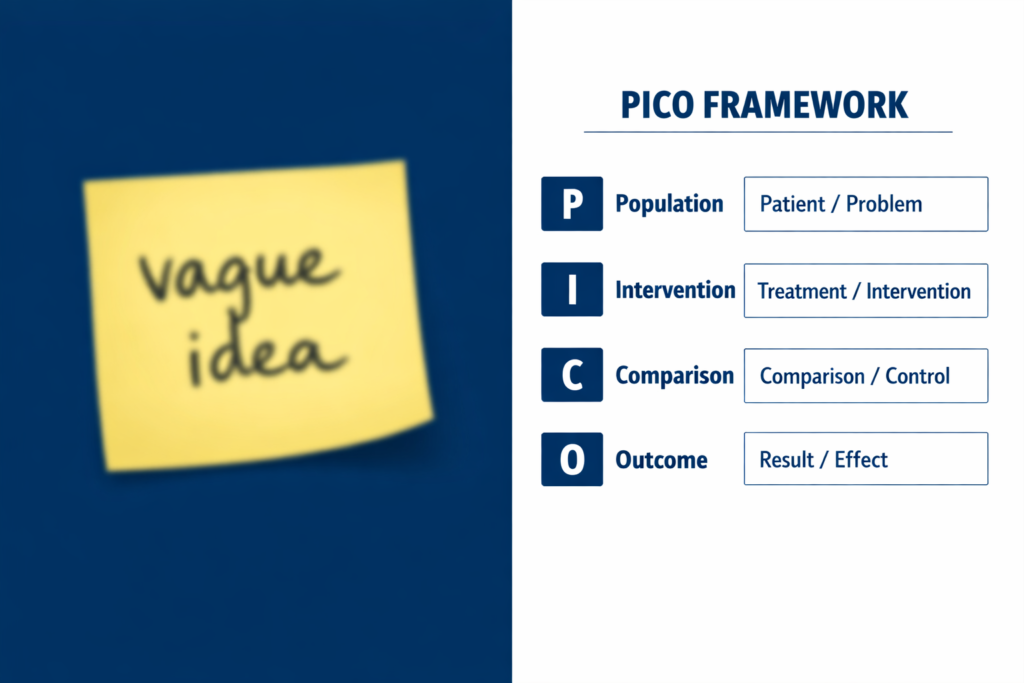
A good evidence-based practice essay topic should be specific enough to allow a focused argument, supported by recent and credible peer-reviewed research, clinically or professionally relevant to your field, framed around a clear problem or practice gap, and amenable to a PICO question (Patient/Population, Intervention, Comparison, Outcome).
Avoid topics that are too broad (such as “nursing care” or “mental health”) or too narrow (such that fewer than five credible studies exist). The sweet spot is a topic with sufficient literature available from the past five to ten years and a clear practice implication.
Evidence-Based Practice Essay Topics Ideas for Nursing Students
Nursing is one of the most common fields where EBP essays are assigned. The following topics are well-supported by research and frequently requested by nursing students seeking evidence-based practice essay writing help:
Patient Safety and Quality of Care
- The effect of nurse-to-patient staffing ratios on patient safety outcomes in acute care settings
- Evidence-based strategies for reducing central line-associated bloodstream infections (CLABSI) in ICU patients
- The role of structured handoff communication tools (SBAR) in reducing medication errors during shift changes
- Hourly rounding protocols and their impact on patient fall rates in medical-surgical units
Mental Health Nursing
- Effectiveness of cognitive behavioral therapy (CBT) versus pharmacotherapy in managing generalized anxiety disorder in adults
- Trauma-informed care approaches for patients with post-traumatic stress disorder (PTSD) in emergency departments
- The impact of mindfulness-based stress reduction programs on burnout rates among registered nurses
- Suicide risk assessment tools: comparing the Columbia Suicide Severity Rating Scale (C-SSRS) to standard clinical judgment
Maternal and Child Health
- Kangaroo mother care and its effect on neonatal outcomes in preterm infants
- Evidence-based interventions to promote exclusive breastfeeding in the first six months of life
- The effectiveness of continuous support during labor on caesarean section rates
Evidence-Based Practice Essay Topics for Public Health Students
Public health EBP essays focus on population-level interventions and health promotion. These are some of the most compelling and well-researched topic areas for public health students:
- Community-based interventions for reducing childhood obesity rates in low-income urban populations
- The effectiveness of needle exchange programs in reducing HIV transmission among intravenous drug users
- Impact of school-based sexual health education on teenage pregnancy rates
- Evidence supporting mandatory vaccination policies in reducing vaccine-preventable disease outbreaks
- Telehealth interventions and their effectiveness in managing hypertension in rural and underserved communities
- The role of sugar-sweetened beverage taxes in reducing obesity and Type 2 diabetes prevalence
- Workplace wellness programs and their measurable impact on employee cardiovascular health
Read on Evidence-Based Practice Paper: A Complete Student Guide
EBP Essay Topic Ideas for Social Work and Psychology Students
Evidence-based practice is increasingly central to social work, counseling, and psychology. The following topics are ideal for students in these disciplines who are searching for evidence-based practice essay examples and inspiration:
- Motivational interviewing versus standard counseling in substance use disorder treatment programs
- The effectiveness of trauma-focused cognitive behavioral therapy (TF-CBT) in children who have experienced abuse
- Evidence-based family therapy approaches for adolescents with conduct disorder
- The impact of early childhood intervention programs (such as Head Start) on long-term educational and social outcomes
- Mindfulness-based cognitive therapy (MBCT) for the prevention of depressive relapse in adults
- The effectiveness of wraparound services in reducing recidivism among juvenile offenders
- Parent-child interaction therapy (PCIT) and its outcomes in families at risk of child maltreatment
How to Turn a Topic Idea into a Strong EBP Essay
Once you have chosen your evidence-based practice essay topic, the real work begins. Here is a streamlined process that Elite Academic Broker’s expert writers follow when developing any EBP essay from topic to final draft:
- Frame a PICO Question — Convert your topic into a structured clinical or research question. For example, for the topic of staffing ratios, your PICO question might be: ‘In adult patients in acute care settings (P), does a nurse-to-patient ratio of 1:4 (I), compared to a ratio of 1:6 (C), result in fewer adverse patient safety events (O)?’
- Conduct a Targeted Literature Search — Use PubMed, CINAHL, Cochrane Library, or PsycINFO to search for studies published in the last 5–10 years. Use Boolean operators (AND, OR, NOT) and apply filters for peer-reviewed, full-text articles.
- Appraise the Evidence — Evaluate each source using a critical appraisal tool such as the CASP checklist or Johns Hopkins Nursing EBP Model. Rank studies by their level of evidence using the evidence hierarchy pyramid.
- Synthesize Your Findings — Do not just summarize each study in isolation. Look for themes, patterns, contradictions, and gaps across your sources. Present your synthesis as a coherent argument leading to a clear recommendation.
- State Your Practice Recommendation — Based on the evidence, what should clinicians, policymakers, or practitioners do? Be specific. Support every claim with at least one credible, peer-reviewed citation.
- Discuss Implementation and Evaluation — Address how the recommended practice change would be implemented in a real-world setting and how its effectiveness would be measured over time.
How Elite Academic Broker Helps With Your EBP Essay
Finding the right evidence-based practice essay topic is just the beginning. Writing a high-scoring EBP essay requires expertise in academic research, critical appraisal, APA formatting, and professional writing — skills that take years to develop.
At Elite Academic Broker, our team of subject-matter experts specializes in evidence-based practice essay writing across nursing, public health, social work, psychology, and allied health disciplines. When you order an EBP essay from us, you receive a fully custom paper built around your specific assignment instructions, chosen topic, and academic level — written from scratch by a qualified expert with relevant field knowledge.
Our writers follow every step of the EBP process: formulating your PICO question, conducting a systematic literature search, critically appraising each source, synthesizing the evidence, and delivering a polished, plagiarism-free essay that meets your institution’s grading rubric.
Whether you need a two-page EBP reflection, a ten-page research-backed position paper, or anything in between, Elite Academic Broker delivers quality, speed, and confidentiality every time.
Evidence-Based Practice Essay Examples: How Strong Topics Are Framed
One of the most common reasons students lose marks on EBP essays is not a lack of effort, it is poor topic framing. A vague, broadly stated topic produces a vague, unfocused essay. A precisely framed topic, structured around the PICO model, produces a sharp, evidence-rich argument that is far easier to research, write, and defend.
Below are four side-by-side comparisons, one from nursing, one from public health, one from mental health, and one from social work, showing exactly what separates a weak topic from a strong one, and why the difference matters.
Example 1: Nursing: Hospital Falls Prevention
Weak Framing: “Preventing falls in hospitals.”
Why this is weak: This statement is so broad it could apply to any patient population, any type of hospital unit, any intervention, and any time period. It gives you no direction for your literature search and no clear argument to build. You could find hundreds of loosely related studies and still not know which ones are actually relevant to your essay.
Strong Framing: “In hospitalized adult patients aged 65 and over in medical-surgical units (P), does the implementation of a structured multifactorial fall prevention program including hourly nursing rounds, bed exit alarm systems, non-slip footwear protocols, and patient and family education (I) compared to routine standard nursing care without a structured fall prevention protocol (C), significantly reduce the incidence of in-hospital falls and fall-related injuries within a 90-day implementation period (O)?”
Why this works: Every element of the PICO framework is clearly defined. You know exactly which patients you are studying (elderly adults in medical-surgical units), the specific intervention being evaluated (a multifactorial program with named components), what it is being compared against (standard care), and what outcome you are measuring (fall incidence and injury rates within 90 days). Your literature search is now laser-focused, and your recommendation will be grounded in directly relevant evidence.
Example 2: Public Health: Childhood Obesity
Weak Framing: “Addressing childhood obesity.”
Why this is weak: Childhood obesity is an enormous topic spanning genetics, diet, physical activity, socioeconomic factors, policy, and more. Without specifying a population, an intervention, and a measurable outcome, this topic could lead you in dozens of directions , none of them deeply explored. An essay built on this framing typically ends up as a surface-level overview rather than a focused evidence-based argument.
Strong Framing: “Among children aged 6 to 12 years residing in low-income urban communities in the United States (P), do structured school-based programs combining daily physical activity sessions and weekly nutrition education classes (I), compared to schools offering no formal nutrition or physical activity programming beyond standard curriculum (C), produce statistically significant reductions in BMI percentile and improvements in self-reported dietary habits after a 12-month intervention period (O)?”
Why this works: The population is now precise not just “children” but children in a specific age range, in a specific socioeconomic and geographic context. The intervention has named components (daily physical activity + weekly nutrition education). The comparison group is clearly defined. The outcomes are specific and measurable (BMI percentile reduction, dietary habit improvement). Any study you find that matches these parameters goes directly into your essay. Everything else gets filtered out.
Example 3: Mental Health Nursing : Anxiety Management
Weak Framing: “Treating anxiety in patients.”
Why this is weak: Anxiety disorders include generalized anxiety disorder, social anxiety, panic disorder, PTSD, and more. “Patients” could mean children, adults, elderly individuals, inpatients, or outpatients. “Treating” could mean medication, therapy, lifestyle changes, or any combination. This framing gives a reader, and a search engine, absolutely nothing to hold onto. The resulting essay will lack coherence, and critical appraisal becomes nearly impossible because you are comparing apples to oranges.
Strong Framing: “In adult outpatients aged 18 to 60 diagnosed with generalized anxiety disorder (GAD) (P), is a structured 12-week course of cognitive behavioral therapy (CBT) delivered by a licensed therapist (I), more effective than first-line pharmacotherapy with selective serotonin reuptake inhibitors (SSRIs) (C), in reducing GAD symptom severity as measured by the Generalized Anxiety Disorder 7-item scale (GAD-7) at the end of the treatment period (O)?”
Why this works: The diagnosis is specific (GAD, not anxiety broadly). The population is narrowed by age and care setting (adult outpatients). The intervention is clearly named and operationalized (12-week CBT by a licensed therapist). The comparator is a recognized alternative treatment (SSRIs). The outcome uses a validated measurement tool (GAD-7 scale). This framing allows you to search specifically for RCTs and systematic reviews comparing CBT to SSRIs in GAD, a well-researched area with strong evidence available.
Example 4: Social Work : Substance Use Recovery
Weak Framing: “Helping people recover from addiction.”
Why this is weak: “People” is not a population. “Addiction” is not a diagnosis. “Helping” is not an intervention. This framing reads more like a personal statement than a research question. It signals to your instructor that you have not yet engaged with the EBP process and are approaching the topic anecdotally rather than scientifically.
Strong Framing: “In adults aged 25 to 50 with a confirmed diagnosis of opioid use disorder (OUD) receiving outpatient treatment (P), does the integration of motivational interviewing (MI) conducted by certified social workers alongside standard medication-assisted treatment (MAT) with buprenorphine (I), compared to MAT alone without structured behavioral counseling (C), improve treatment retention rates and reduce rates of opioid relapse at the 6-month follow-up point (O)?”
Why this works: The diagnosis is clinically precise (opioid use disorder, not just “addiction”). The population is specific in age, care setting, and treatment context. The intervention adds a clearly defined behavioral component (MI by certified social workers) layered on top of an established treatment (MAT). The comparison isolates the effect of MI by using MAT alone as the control. The outcomes are objective and time-bound (retention rates and relapse rates at 6 months). This is a question that can be answered with real research and that is the entire point of evidence-based practice.
Final Thoughts: Choosing Your EBP Essay Topic with Confidence
Choosing the right evidence-based practice essay topics is one of the most important decisions you will make before sitting down to write. A strong topic with clear clinical or professional relevance, supported by abundant peer-reviewed evidence, sets you up for a compelling, well-structured essay that earns top marks.
Use the topic ideas in this guide as a starting point. Refine them using the PICO framework, ensure adequate literature exists, and align your topic with your course learning objectives. If you need help at any stage from topic selection to final editing, Elite Academic Broker is ready to support you.
Place your order today and let our EBP writing experts help you submit an essay that stands out.









 Evan John