Nursing school is one of the most demanding academic journeys a person can undertake. Between clinical rotations, pharmacology exams, and the emotional weight of patient care, it is easy to feel overwhelmed in the early weeks. Yet experienced nurses and nursing educators agree on one thing: students who master the foundational concepts early are the ones who thrive both in school and in clinical practice.
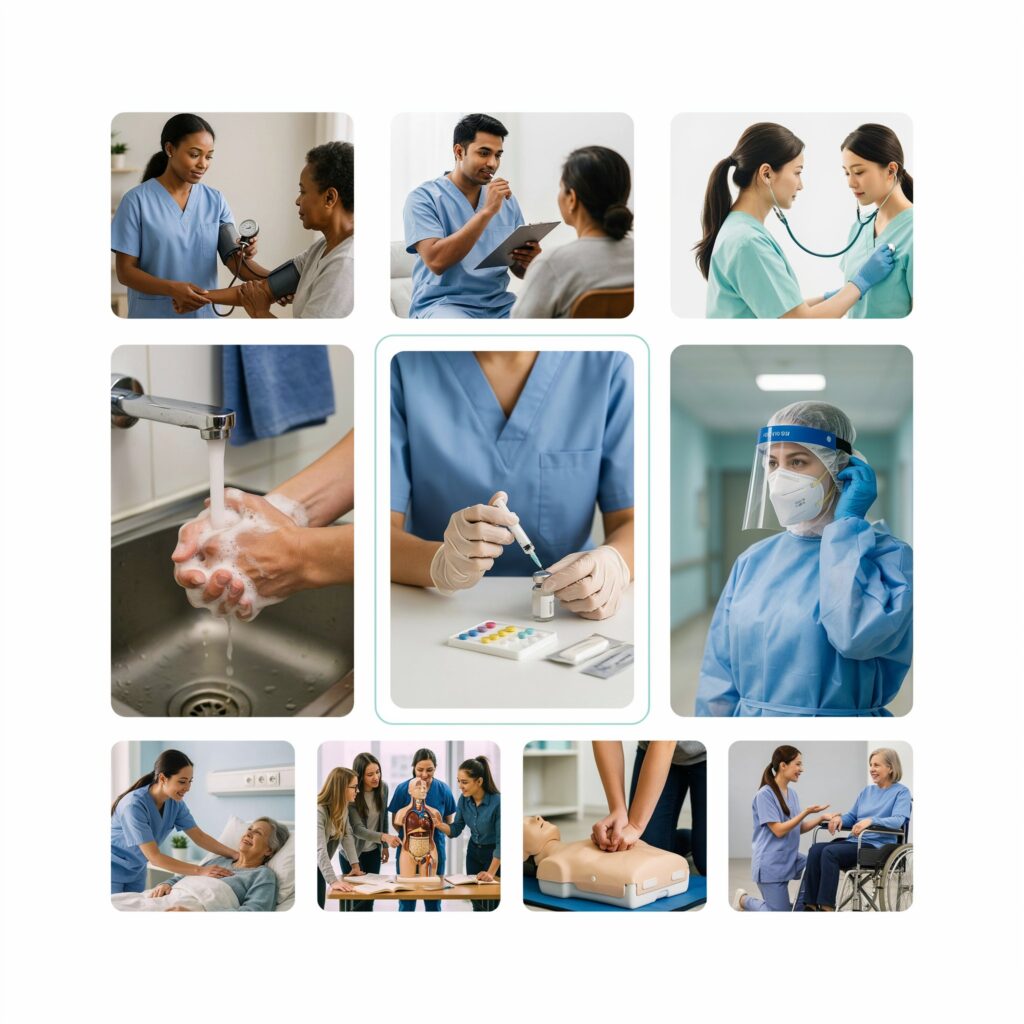
This comprehensive guide walks you through the basic concepts every nursing student must know before stepping into a clinical setting. Whether you are just starting your program or looking to reinforce your foundation, this guide covers everything from anatomy to ethics, patient assessment to communication, and pharmacology to legal accountability.
Bookmark this page. Share it with your study group. This is your go-to resource for nursing fundamentals.
Basic Concepts Every Nursing Student Must Know
1. The Nursing Process: ADPIE
The nursing process is the backbone of clinical nursing practice. It is a five-step systematic framework that guides nurses in delivering consistent, evidence-based, and individualized patient care. Every nursing student must understand and internalize this process before their first clinical day.
The five steps are:
- Assessment: Collecting comprehensive data about the patient through physical examination, interviews, medical history review, and diagnostic results. This is where you gather subjective data (what the patient tells you) and objective data (what you observe and measure).
- Diagnosis: Identifying the patient’s health problems using standardized NANDA-I (North American Nursing Diagnosis Association International) nursing diagnoses. This is different from a medical diagnosis it focuses on the patient’s response to illness, not the illness itself.
- Planning: Establishing measurable, patient-centered goals and determining nursing interventions to achieve those outcomes. Goals must be SMART: Specific, Measurable, Achievable, Realistic, and Time-bound.
- Implementation: Carrying out the care plan through direct interventions, patient education, coordination with the healthcare team, and documentation.
- Evaluation: Assessing whether the goals have been met, partially met, or not met, and revising the care plan accordingly.
Mastering ADPIE early gives you a consistent lens through which to view every patient interaction throughout your career.
2. Anatomy and Physiology Essentials
You cannot effectively care for a patient if you do not understand how the human body works. Anatomy and physiology (A&P) is the science of body structures and their functions, and it underpins everything in nursing from interpreting lab results to understanding why a medication produces certain side effects.
Key systems every nursing student must know include:
- Cardiovascular system: Cardiac cycle, blood pressure regulation, heart sounds, and the role of the heart in oxygen delivery.
- Respiratory system: Gas exchange, lung mechanics, acid-base balance, and the significance of SpO2 and arterial blood gases (ABGs).
- Renal system: Fluid and electrolyte balance, urine output norms, and kidney function in filtering blood.
- Nervous system: The central and peripheral nervous systems, reflex arcs, neurological assessments, and Glasgow Coma Scale.
- Endocrine system: Hormone regulation, insulin and glucose metabolism, and the nursing implications of conditions like diabetes and thyroid disorders.
A strong grip on A&P helps you anticipate complications, ask better clinical questions, and understand the rationale behind every intervention.
3. Vital Signs: Your First Clinical Window
Vital signs are the most fundamental form of patient assessment. They provide an immediate snapshot of a patient’s physiological status and are often the first indicator that something is changing for better or worse.
Every nursing student must know the normal ranges and clinical significance of:
- Temperature: Normal is 36.1°C to 37.2°C (97°F to 99°F). Fever (pyrexia) signals infection or inflammation; hypothermia indicates exposure or shock.
- Pulse: Normal adult range is 60 to 100 beats per minute. Assess rate, rhythm, and strength. Tachycardia and bradycardia each carry distinct causes and nursing responses.
- Respirations: Normal is 12 to 20 breaths per minute. Note depth and effort. Irregular breathing patterns like Cheyne-Stokes have specific clinical associations.
- Blood Pressure: Normal is less than 120/80 mmHg. Hypertension and hypotension both require timely nursing action and documentation.
- Oxygen Saturation (SpO2): Normal is 95% to 100%. Values below 90% are a clinical emergency in most patients.
- Pain: Recognized as the sixth vital sign. Use validated tools like the Numeric Rating Scale (NRS) or FLACC scale for non-verbal patients.
Never dismiss a subtle change in vital signs. Many deteriorations are preceded by small, early warning signals that a vigilant nurse can catch.
4. Pharmacology Fundamentals
Medication errors are one of the leading causes of preventable patient harm in healthcare. This is why pharmacology is one of the most critical areas a nursing student must master. You are the last line of defense before a drug reaches a patient.
The Five Rights of Medication Administration remain the gold standard:
- Right Patient: Verify using two identifiers before every medication.
- Right Drug: Confirm the medication name, including generic vs. brand names.
- Right Dose: Double-check calculations, especially for high-alert medications like heparin and insulin.
- Right Route: Oral, IV, IM, sublingual, and topical routes all carry different onset times and risks.
- Right Time: Timing matters some medications require specific intervals to maintain therapeutic levels.
Beyond the Five Rights, nursing students must understand:
- Pharmacokinetics: How the body absorbs, distributes, metabolizes, and excretes drugs (ADME).
- Pharmacodynamics: How drugs exert their effects at the cellular and organ level.
- Drug classifications and their common side effects, contraindications, and nursing considerations.
- High-alert medications that require double-checking protocols.
When in doubt, consult a reliable drug reference or your pharmacist. Never administer a medication you are not confident about.
5. Infection Control and Standard Precautions
Preventing the spread of infection is one of nursing’s most fundamental responsibilities. Healthcare-associated infections (HAIs) cause thousands of preventable deaths every year, and nursing students play a direct role in reducing this risk.
Standard precautions apply to all patients, regardless of diagnosis:
- Hand hygiene before and after every patient contact , this is non-negotiable.
- Personal Protective Equipment (PPE): Gloves, gowns, masks, and eye protection are worn based on the nature of the exposure.
- Safe sharps handling and disposal to prevent needle-stick injuries.
- Respiratory hygiene to prevent droplet transmission.
- Proper handling of soiled linens, equipment, and environmental surfaces.
Beyond standard precautions, learn transmission-based precautions: contact, droplet, and airborne. Know which conditions require which isolation category. For example, tuberculosis requires airborne precautions and a negative-pressure room, while Clostridioides difficile (C. diff) requires contact precautions with soap and water not alcohol hand gel.
6. Patient Assessment Skills
Head-to-toe assessment is a structured, systematic way of evaluating a patient’s physical status. As a nursing student, you will perform this every shift often multiple times for unstable patients. Learning to do it efficiently and thoroughly is a foundational clinical skill.
A thorough assessment covers:
- Neurological: Level of consciousness, orientation, pupil response, motor strength, and sensation.
- Cardiovascular: Heart sounds (S1, S2), capillary refill, peripheral pulses, and edema.
- Respiratory: Breath sounds (clear, crackles, wheezes, rhonchi), respiratory effort, and symmetry.
- Gastrointestinal: Bowel sounds in all four quadrants, abdominal tenderness, and last bowel movement.
- Genitourinary: Urine output, color, clarity, and any reports of dysuria or frequency.
- Musculoskeletal: Mobility, muscle tone, range of motion, and fall risk.
- Integumentary: Skin color, temperature, turgor, and any wounds, rashes, or pressure injuries.
Practice makes perfect with head-to-toe assessments. Use a consistent order every time so nothing is missed.
7. Fluid and Electrolyte Balance
The human body is approximately 60% water. Maintaining fluid and electrolyte balance is essential for virtually every cellular process, and imbalances can rapidly become life-threatening if not identified and corrected.
Key electrolytes nursing students must understand:
- Sodium (Na+): Regulates fluid balance. Hyponatremia causes confusion and seizures; hypernatremia causes neurological symptoms and dehydration signs.
- Potassium (K+): Critical for cardiac function. Hypokalemia causes muscle weakness and dangerous arrhythmias; hyperkalemia can cause fatal cardiac arrest if severe.
- Calcium (Ca2+): Essential for muscle contraction and nerve signaling. Hypocalcemia presents with Trousseau’s and Chvostek’s signs.
- Magnesium (Mg2+): Important for neuromuscular function. Deficiency often accompanies hypokalemia.
Learn to recognize symptoms of fluid volume deficit (dehydration: dry mucous membranes, decreased urine output, tachycardia) and fluid volume excess (overload: crackles, edema, hypertension). IV fluid types isotonic, hypotonic, and hypertonic each have specific indications, and administering the wrong type can harm patients.
8. Communication and Therapeutic Relationships
Nursing is as much a communication profession as it is a clinical one. Patients are often frightened, in pain, or struggling to understand their diagnoses. Your ability to communicate with empathy, clarity, and professionalism directly impacts patient outcomes.
Core communication skills for nursing students include:
- Therapeutic communication techniques: Active listening, open-ended questions, reflection, and clarification. Avoid false reassurances and leading questions.
- SBAR: Situation, Background, Assessment, Recommendation. This structured communication tool is used when reporting changes to physicians or during handoffs.
- Motivational interviewing: A patient-centered approach to supporting behavior change, especially relevant in chronic disease management.
- Cultural competence: Understanding that health beliefs, communication styles, and attitudes toward healthcare vary across cultures. Meet patients where they are.
- Health literacy: Use plain language. Avoid jargon. Check for understanding using the teach-back method.
Document all communications accurately. What is not documented is legally considered not done.
Also read on Nursing Student Burnout: 12 Warning Signs You Can’t Ignore
9. Nursing Ethics and Legal Principles
Nursing practice is governed by a robust ethical and legal framework designed to protect both patients and nurses. Understanding these principles is not optional, it is a professional obligation.
The four core principles of bioethics:
- Autonomy: Respect the patient’s right to make their own informed decisions, even when you disagree.
- Beneficence: Act in the patient’s best interest at all times.
- Non-maleficence: Do no harm weigh every intervention against its risks.
- Justice: Treat all patients fairly and equitably, regardless of background.
Key legal concepts every nursing student must know:
- Informed Consent: Patients must understand and voluntarily agree to any procedure or treatment.
- Confidentiality and HIPAA: Patient information is protected and may only be shared on a need-to-know basis.
- Scope of Practice: Know your boundaries as a student, LPN/LVN, RN, or APRN. Never practice outside your scope.
- Mandatory Reporting: Nurses are legally required to report suspected abuse, neglect, or certain communicable diseases.
- Negligence and Malpractice: Understand the difference and practice defensively by documenting thoroughly and following protocols.
Also read on
10. Critical Thinking and Clinical Judgment
Nursing is not a memorization exercise, it is an applied science that demands constant critical thinking. The ability to synthesize patient data, anticipate complications, prioritize interventions, and make sound clinical judgments is what separates safe nurses from great ones.
The NCLEX-Next Generation (NGN) testing format now explicitly measures clinical judgment using the Clinical Judgment Measurement Model (CJMM). This model assesses your ability to:
- Recognize cues from patient data and clinical findings.
- Analyze cues to determine their significance and urgency.
- Prioritize hypotheses about what is most likely happening with the patient.
- Generate solutions based on best available evidence.
- Take action by implementing the selected interventions.
- Evaluate outcomes to determine whether the plan is working.
Develop your clinical thinking skills by reflecting on every patient encounter, practicing case studies, and asking ‘why’ at every step. Ask your instructors to explain the rationale behind interventions do not just follow orders blindly.
Key Takeaways for Nursing Students
Mastering nursing fundamentals is not about cramming everything into a single week , it is about building a solid foundation, concept by concept, clinical day by clinical day. Here is a quick summary of what we have covered:
- The nursing process (ADPIE) is your framework for all clinical decision-making.
- Strong anatomy and physiology knowledge underpins everything you will do as a nurse.
- Vital signs are your earliest and most accessible window into a patient’s status.
- Pharmacology safety especially the Five Rights protects patients from preventable harm.
- Infection control through standard and transmission-based precautions is a core professional duty.
- Systematic head-to-toe assessment ensures nothing is missed.
- Fluid and electrolyte imbalances can be life-threatening and require early recognition.
- Communication and therapeutic relationships are as critical as clinical skills.
- Ethical and legal principles guide your practice and protect both you and your patients.
- Critical thinking and clinical judgment are skills that grow with practice and reflection.
Frequently Asked Questions (FAQ)
Q1: What is the most important concept for a nursing student to learn first?
The nursing process (ADPIE) is widely considered the most foundational concept because it provides a systematic framework that applies to every clinical situation. Once you understand ADPIE, all other concepts assessment, diagnosis, pharmacology, communication fall into place within it.
Q2: How do nursing students best learn pharmacology?
Focus on drug classes rather than individual drugs. Learn the mechanism of action, major side effects, contraindications, and nursing considerations for each class. Use mnemonics, drug cards, and repetition. Always understand why a patient is receiving a drug, not just what they are taking.
Q3: Are the Five Rights of Medication Administration still current?
Yes. The Five Rights remain the foundation of safe medication practice. Many institutions have expanded them to include additional rights such as Right Documentation, Right Reason, and Right Response but the original five are the non-negotiable minimum standard.
Q4: How can nursing students improve clinical judgment?
Practice, reflection, and active engagement are key. Participate fully in clinical rotations, ask your preceptor to think out loud so you can observe their reasoning, complete case study exercises, and use the NCLEX-NGN style questions that target clinical judgment. Journaling your clinical experiences can also deepen reflective learning.
Q5: What is the difference between a nursing diagnosis and a medical diagnosis?
A medical diagnosis identifies a disease or pathological condition (e.g., Type 2 Diabetes Mellitus). A nursing diagnosis identifies the patient’s human response to that condition and is within the nurse’s scope of practice to address (e.g., Imbalanced Nutrition: More Than Body Requirements related to excessive caloric intake as evidenced by BMI of 34). Nursing diagnoses guide the care plan and nursing interventions.
Final Word: Build Your Foundation Now
The nursing concepts covered in this guide are not just exam material they are the building blocks of every safe, compassionate, and competent nurse who has ever walked a hospital floor. The nurses who become trusted experts in their fields are the ones who treated their foundational knowledge seriously from day one.
Start with the nursing process. Learn your A&P. Master your vital signs. Respect every medication you administer. And never stop asking questions.
If you found this guide helpful, share it with a classmate who is just starting their nursing journey. Subscribe to our newsletter for more evidence-based nursing education resources, study guides, and clinical tips.









 Evan John