Our Process

Get Paper Done In 3 Simple Steps

Place an order

Visit the URL and place your order with us. Fill basic details of your research paper, set the deadlines and submit the form.

Make payments

Chat with our experts to get the best quote. Make the payment via online banking, debit/credit cards or through paypal. Recieve an order confirmation number.

Receive your paper

Sit back and relax. Your well written, properly referenced research paper will be mailed to your inbox, before deadline. Download the paper. Revise and Submit.

Shape Thumb
Shape Thumb
Shape Thumb
  • Evan John Evan John
  • 7 min read

Reflective Nursing Essay Guide: Master Reflective Writing with Confidence

Reflective writing is one of the most important academic skills every nursing student must develop. Whether you’re writing a placement reflection, clinical portfolio, coursework assignment, or professional development journal, the ability to analyse experiences critically can significantly improve both your academic performance and your future nursing practice.

Unfortunately, many nursing students struggle with reflective essays because they are never taught how to reflect. They know how to describe what happened, but they often lose marks because they don’t analyse experiences, evaluate decisions, connect theory to practice, or develop meaningful action plans.

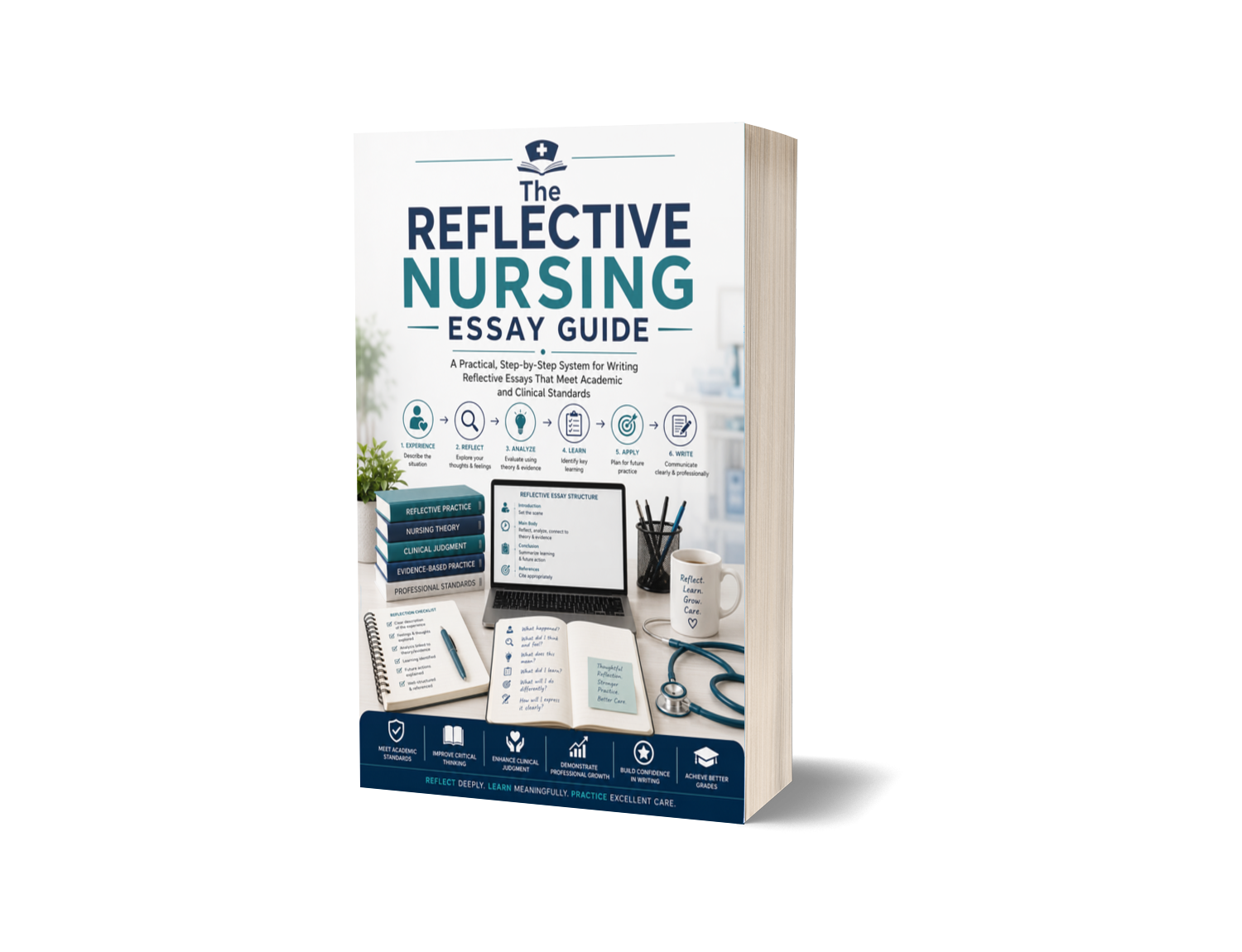
The Reflective Nursing Essay Guide is a comprehensive workbook created specifically for nursing students who want to write reflective essays that demonstrate critical thinking, professionalism, and evidence-based practice. Instead of offering vague advice, this guide walks you through every stage of reflective writing using proven frameworks, practical examples, worksheets, templates, and editing tools.

Whether you’re an undergraduate nursing student, postgraduate learner, or registered nurse completing continuing professional development, this guide provides a practical system for writing reflective essays with clarity and confidence.

Why Reflective Writing Matters in Nursing

Reflection is much more than an academic assignment. It is a professional skill expected throughout your nursing career.

Reflective practice allows nurses to evaluate clinical experiences, improve decision-making, strengthen communication, identify learning opportunities, and deliver safer, patient-centred care.

Universities assess reflective writing because it demonstrates your ability to:

  • Think critically about clinical situations
  • Apply evidence to practice
  • Evaluate your own performance professionally
  • Learn from experience
  • Improve future patient care
  • Develop lifelong professional competence

This guide teaches you how to build these skills while producing reflective essays that meet university marking criteria.

What You’ll Learn Inside

The workbook follows a structured progression, helping you move from understanding reflection to producing polished, evidence-based reflective essays.

Understand What Reflection Really Means

The opening chapters explain why reflection is a professional skill rather than simply describing clinical experiences.

You’ll learn:

  • The difference between description and reflection
  • Why nursing programmes place so much emphasis on reflective practice
  • The three levels of reflective thinking
  • How reflection supports professional development

Understanding these foundations immediately helps you avoid one of the biggest mistakes students make—writing descriptive narratives instead of critical reflections.

Learn the Most Popular Reflective Models

Many students recognise names like Gibbs or Driscoll but struggle to apply them correctly.

This guide explains each reflective framework clearly, including:

  • Gibbs’ Reflective Cycle
  • Kolb’s Experiential Learning Cycle
  • Driscoll’s What? So What? Now What?
  • Johns’ Model of Structured Reflection
  • Rolfe et al.’s Reflective Framework

You’ll understand when each model is appropriate and how to organise your assignments using each framework.

Choose Better Clinical Experiences

Not every placement experience leads to a strong reflective essay.

You’ll discover practical methods for selecting meaningful incidents using:

  • The Five-Question Filter
  • Professional judgement
  • Confidentiality principles
  • Analytical value rather than emotional intensity

This helps you select experiences that provide genuine opportunities for critical analysis.

Write Better Descriptions

Many reflective essays waste valuable words describing events instead of analysing them.

This guide teaches practical techniques such as:

  • The 5W Compression Technique
  • Professional clinical language
  • Structured description templates
  • Clear and concise writing

You’ll learn how to provide enough background information while leaving room for deeper reflection.

Reflect on Emotions Professionally

Effective reflection goes beyond writing “I felt nervous” or “I was stressed.”

You’ll learn how to use the Emotion-Cause-Effect Chain to explore:

  • Why you experienced certain emotions
  • How those emotions influenced your decisions
  • What you learned from those experiences

This creates more mature and academically valuable reflective writing.

Evaluate Clinical Practice Critically

One of the weakest sections in many reflective essays is evaluation.

This workbook introduces practical tools including:

  • The Balanced Scorecard Method
  • Objective evaluation standards
  • Evidence-based judgement
  • Balanced strengths and weaknesses

Instead of simply criticising yourself, you’ll learn how to evaluate practice fairly and professionally.

Develop Critical Analysis Skills

High-scoring reflective essays analyse experiences instead of merely describing them.

You’ll learn advanced techniques including:

  • The Five Whys Technique
  • Root cause analysis
  • Integrating nursing theories
  • Using research evidence
  • Considering wider healthcare systems

These methods help transform simple reflections into sophisticated academic work.

Write Strong Conclusions and Action Plans

A reflective conclusion should demonstrate learning—not simply summarise events.

This guide shows you how to:

  • Synthesize your learning
  • Identify realistic alternatives
  • Create SMART action plans
  • Connect reflections to long-term professional development

Integrate Evidence Effectively

Reflective writing should combine personal experience with academic literature.

You’ll learn how to:

  • Choose appropriate evidence
  • Integrate citations naturally
  • Maintain your own academic voice
  • Support reflective arguments with research

Maintain Professionalism and Confidentiality

Patient confidentiality remains one of the most important responsibilities in reflective writing.

The guide explains how to:

  • Properly anonymise patients
  • Follow professional nursing codes
  • Reflect on mistakes ethically
  • Demonstrate accountability without inappropriate self-blame

Improve Your Academic Writing Style

Strong reflective essays use an appropriate academic tone while remaining personal.

You’ll learn:

  • When to use first-person writing
  • Professional sentence structures
  • Correct tense usage
  • Effective transitions
  • Strong introductions
  • Consistent referencing

Edit Like a Professional

Excellent reflective essays are developed through careful editing.

The workbook introduces a Five-Pass Editing Process that helps improve:

  • Structure
  • Critical analysis
  • Grammar
  • Referencing
  • Professional presentation

You’ll also learn how to assess your work using marking rubrics and tutor feedback.

Avoid the Most Common Reflective Writing Mistakes

The guide concludes by examining the mistakes that most commonly reduce student grades, including:

  • Weak structure
  • Limited analysis
  • Poor integration of evidence
  • Confidentiality breaches
  • Unprofessional language
  • Referencing mistakes
  • Weak conclusions

Learning these pitfalls before submitting your work can significantly improve your marks.

Practical Worked Examples Included

The workbook includes complete examples based on realistic nursing scenarios to demonstrate exactly how effective reflective writing should look.

Examples include:

  • Gibbs’ Reflective Cycle – Medication Escalation Decision
  • Driscoll’s Model – Communication Barrier During Patient Care
  • Johns’ Model – Ethical Dilemma in Postgraduate Nursing Practice

These examples provide clear models that students can learn from when writing their own assignments.

Practical Worksheets and Templates

This workbook includes printable resources designed to simplify every stage of reflective writing.

Worksheets include:

  • Incident Selection Filter
  • 5W Description Planner
  • Emotion-Cause-Effect Chain
  • Balanced Scorecard Evaluation
  • Five Whys Analysis Worksheet
  • SMART Action Plan Builder
  • Confidentiality Checklist
  • Five-Pass Editing Tracker

Templates include:

  • Gibbs’ Reflective Cycle Template
  • Driscoll Reflection Template

You’ll also receive printable pre-writing and pre-submission checklists, quick reference guides, and word count allocation tools to support every assignment.

Bonus Resources

To help you continue improving beyond a single assignment, the workbook also includes:

  • Frequently Asked Questions
  • Common Reflective Writing Mistakes
  • Recommended Books
  • Useful Websites
  • Study Apps and Productivity Tools
  • Guidance on Responsible AI Use
  • Top 50 Expert Tips
  • A Complete 30-Day Reflective Writing System
  • Weekly Goals
  • Daily Habits
  • Progress and Success Trackers

Who Is This Guide For?

The Reflective Nursing Essay Guide is ideal for:

  • Student nurses
  • Undergraduate nursing students
  • Postgraduate nursing students
  • Registered nurses completing CPD
  • Midwifery students
  • Healthcare students
  • Allied health students
  • Clinical placement students
  • Anyone required to write reflective healthcare assignments

Why This Reflective Nursing Essay Guide Is Different

Unlike many reflective writing resources that simply explain theory, this guide provides a complete practical system for planning, writing, analysing, editing, and improving reflective nursing essays.

Every chapter combines professional guidance with practical tools, worked examples, templates, worksheets, checklists, and action plans that help you immediately improve the quality of your writing.

Instead of wondering whether your reflection is “good enough,” you’ll have a clear framework that helps you produce reflective essays that demonstrate critical thinking, professionalism, evidence-based practice, and academic excellence.

Start Writing Better Reflective Essays Today

Reflective writing is a skill that improves with the right guidance and consistent practice.

The Reflective Nursing Essay Guide provides everything you need to confidently analyse clinical experiences, integrate academic evidence, demonstrate professional judgement, and produce reflective essays that meet university standards.

Whether you’re writing your very first placement reflection or completing advanced postgraduate coursework, this comprehensive guide will help you become a more confident writer, a stronger critical thinker, and a more reflective healthcare professional.

Calculate the price of your order

You will get a personal manager and a discount.
We'll send you the first draft for approval by at
Total price:
$0.00