Our Process

Get Paper Done In 3 Simple Steps

Place an order

Visit the URL and place your order with us. Fill basic details of your research paper, set the deadlines and submit the form.

Make payments

Chat with our experts to get the best quote. Make the payment via online banking, debit/credit cards or through paypal. Recieve an order confirmation number.

Receive your paper

Sit back and relax. Your well written, properly referenced research paper will be mailed to your inbox, before deadline. Download the paper. Revise and Submit.

Shape Thumb
Shape Thumb
Shape Thumb
  • Evan John Evan John
  • 6 min read

The Ultimate Plagiarism Prevention Guide for Students: Write with Confidence and Academic Integrity

Every student wants to submit original work, earn good grades, and maintain academic integrity. Yet plagiarism remains one of the biggest challenges in schools, colleges, and universities around the world. Many students don’t intentionally copy someone else’s work—they simply don’t understand proper citation, effective paraphrasing, or how to organise their research.

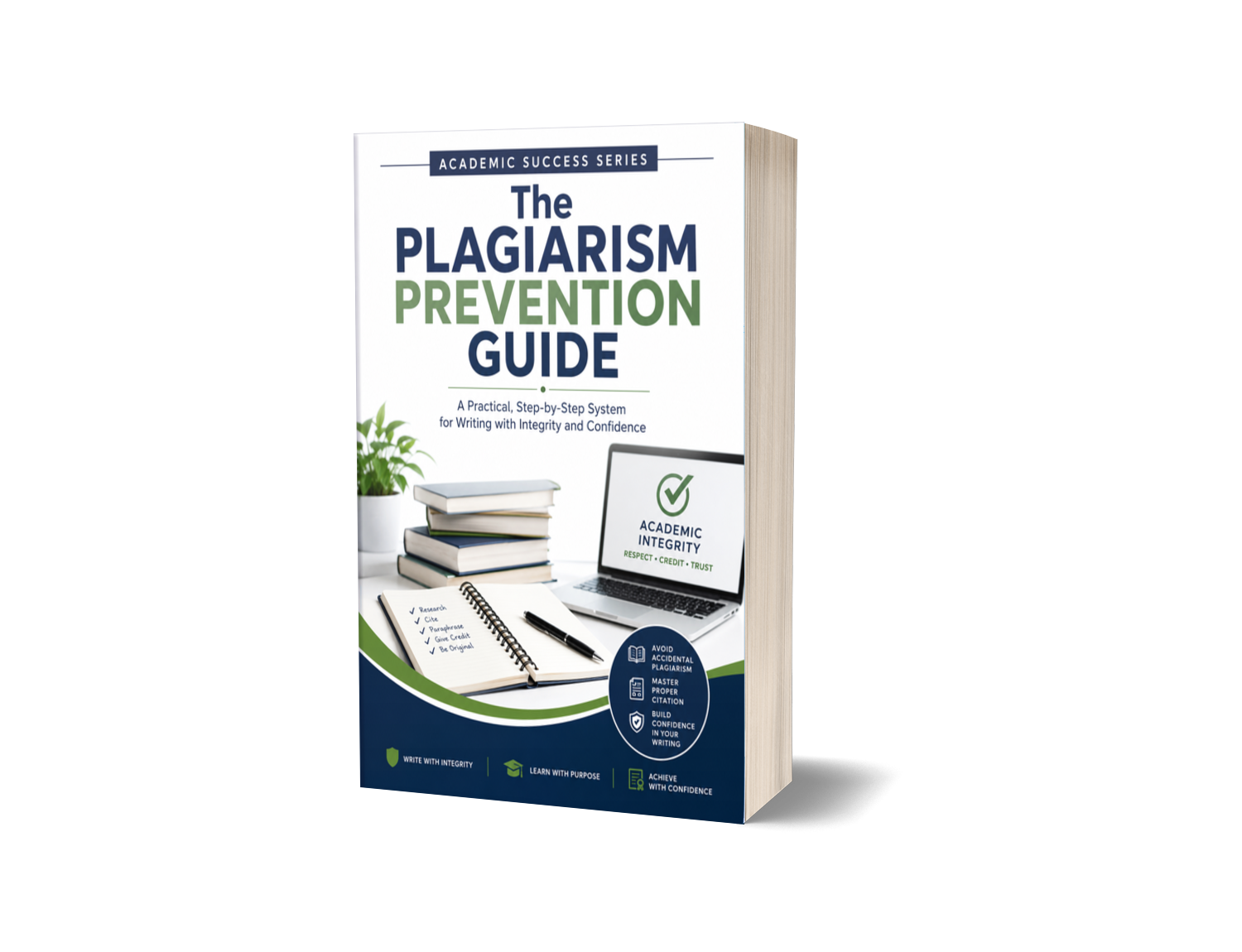
The Plagiarism Prevention Guide is a practical workbook designed to help students understand plagiarism, avoid common mistakes, and develop lifelong academic writing skills. Rather than simply explaining what plagiarism is, this guide provides actionable strategies, exercises, templates, and checklists that help students confidently produce original academic work.

Whether you’re writing essays, research papers, dissertations, case studies, nursing assignments, or university reports, this guide will help you protect your academic reputation while becoming a stronger writer.

Why Every Student Needs a Plagiarism Prevention Guide

Plagiarism is more than copying and pasting text from the internet. It includes poor paraphrasing, missing citations, incorrect referencing, accidental plagiarism, self-plagiarism, and even misuse of AI-generated content.

Educational institutions are becoming increasingly strict about academic integrity. Most universities now use plagiarism detection software to compare submitted work against millions of online sources, academic journals, and previously submitted assignments.

Learning how to write ethically isn’t simply about avoiding penalties—it helps you:

  • Build stronger academic writing skills
  • Develop critical thinking
  • Gain confidence in your own voice
  • Improve research abilities
  • Produce higher-quality assignments
  • Prepare for professional careers where integrity matters

This guide teaches practical habits that can benefit you throughout your education and beyond.

What You’ll Learn Inside This Plagiarism Prevention Guide

The workbook is organised into structured chapters that take you from understanding plagiarism to mastering ethical academic writing.

Understand What Plagiarism Really Means

Start by learning the true definition of plagiarism and why academic integrity matters. Discover how universities typically handle plagiarism cases and why understanding the rules can protect your academic future.

You’ll learn:

  • What plagiarism actually is
  • Why academic honesty matters
  • Institutional policies
  • Real-life examples
  • Reflection exercises
  • Chapter summaries and key takeaways

Explore Every Type of Plagiarism

Many students are surprised to discover how many different forms of plagiarism exist.

This guide explains:

  • Direct plagiarism
  • Mosaic (patchwriting) plagiarism
  • Self-plagiarism
  • Accidental plagiarism
  • Source-based plagiarism
  • Contract cheating and collaboration plagiarism

Understanding these categories makes it easier to recognise and avoid them before submitting your work.

Discover Why Students Accidentally Plagiarise

Poor time management, rushed assignments, weak note-taking systems, and misunderstanding citation rules are common causes of plagiarism.

This chapter helps you identify the root causes and develop better study habits through practical reflection exercises and planning techniques.Build an Academic Integrity Mindset

Academic integrity is much more than following rules.

You’ll learn how to:

  • Develop ethical writing habits
  • Build confidence in your own ideas
  • Create a personal integrity statement
  • Produce genuinely original academic work

Master Research Note-Taking

One of the biggest causes of accidental plagiarism is disorganised research.

This guide introduces a practical Three-Column Note-Taking System that helps students clearly separate:

  • Original ideas
  • Paraphrased information
  • Direct quotations

You’ll also learn how to record complete source information while researching, making citations much easier later.

Learn to Paraphrase Correctly

Simply changing a few words isn’t paraphrasing.

This workbook teaches a proven five-step paraphrasing method that helps students:

  • Understand source material
  • Rewrite ideas completely
  • Maintain original meaning
  • Avoid patchwriting
  • Build stronger academic writing skills

Worked examples and exercises make the process easy to understand.

Quote and Cite Sources Properly

Knowing when to quote and when to paraphrase is essential.

You’ll learn:

  • Direct quotations
  • Block quotations
  • In-text citations
  • Reference lists
  • Secondary citations
  • Citation best practices

Everything is explained in a practical, student-friendly format.

Understand Major Citation Styles

Different courses require different referencing styles.

The guide provides clear introductions to:

  • APA
  • MLA
  • Chicago
  • Harvard

Rather than overwhelming technical rules, the workbook focuses on understanding when and how each style is used.

Build a Complete Research Workflow

Successful students don’t leave referencing until the last minute.

You’ll discover a complete academic workflow covering:

  1. Source gathering
  2. Structured note-taking
  3. Assignment planning
  4. Drafting with citations
  5. Final plagiarism checking

Following this process dramatically reduces the risk of accidental plagiarism.

Use Plagiarism Detection Software Correctly

Many students misunderstand plagiarism reports.

This chapter explains:

  • What similarity scores actually mean
  • Why high similarity isn’t always plagiarism
  • How to interpret reports
  • The limitations of plagiarism checkers
  • Best practices before submission

Navigate Modern Academic Challenges

Today’s students also face new challenges involving AI writing tools and collaborative work.

The workbook explains:

  • Responsible AI use
  • Self-plagiarism
  • Group assignments
  • Ethical collaboration
  • Academic honesty in modern learning environments

Improve Time Management

Last-minute writing often leads to poor decisions.

You’ll learn how to:

  • Reverse-plan assignments
  • Build buffer time
  • Organise research
  • Reduce stress
  • Avoid deadline panic

Know What to Do if You’re Accused of Plagiarism

Receiving an academic integrity allegation can be stressful.

This chapter explains:

  • Typical university procedures
  • How to respond professionally
  • Mistakes to avoid
  • Resources available to students

Build Lifelong Academic Integrity Habits

The final chapters focus on creating sustainable habits that continue throughout university and into your professional career.

Practical Resources Included

Unlike many plagiarism books, this guide includes practical tools you can use immediately.

Worksheets

  • Three-Column Source Notes
  • Paraphrase Quality Check
  • Assignment Reverse-Planning Schedule

Templates

  • Personal Integrity Statement
  • Extension Request Email Template

Printable Checklists

  • Pre-Submission Integrity Checklist
  • Citation Style Checklist

Quick Reference Guides

  • Do I Need to Cite This?
  • Citation Style Cheat Sheet

Frequently Asked Questions

Get answers to common student questions about plagiarism, citations, academic honesty, and research.

Additional Resources

You’ll also receive recommendations for:

  • Academic writing books
  • Study and organisation apps
  • Productivity tools
  • Responsible AI tools
  • Educational websites

Bonus Content

The guide also includes valuable bonus materials to help students stay consistent throughout the semester:

  • Top 50 Expert Tips
  • 30-Day Action Plan
  • Weekly Goals
  • Daily Habits Checklist
  • Progress Tracker
  • Success Tracker

These resources help transform academic integrity into a long-term habit rather than something you only think about before deadlines.

Who Is This Guide For?

This workbook is ideal for:

  • High school students
  • College students
  • University students
  • Nursing students
  • Medical students
  • Business students
  • Law students
  • Education students
  • Postgraduate students
  • Master’s students
  • PhD researchers
  • Adult learners
  • International students
  • Anyone writing academic assignments

Why This Plagiarism Prevention Guide Is Different

Most plagiarism resources simply list rules.

This guide goes much further by combining:

  • Easy-to-understand explanations
  • Real-world examples
  • Reflection questions
  • Practical exercises
  • Ready-to-use worksheets
  • Professional templates
  • Action plans
  • Checklists
  • Long-term productivity systems

Instead of only telling you what not to do, it teaches you exactly how to produce ethical, original, and well-researched academic work.

Start Writing with Confidence Today

Academic integrity isn’t about fearing plagiarism—it’s about developing the confidence to produce original, well-researched work that reflects your own understanding.

The Plagiarism Prevention Guide gives you the knowledge, tools, and structured practice needed to become a stronger academic writer while protecting your grades and reputation.

Whether you’re preparing your first university essay or completing a postgraduate dissertation, this comprehensive workbook will help you research smarter, write ethically, cite correctly, and submit every assignment with confidence.

Calculate the price of your order

You will get a personal manager and a discount.
We'll send you the first draft for approval by at
Total price:
$0.00